 (918) 694-1483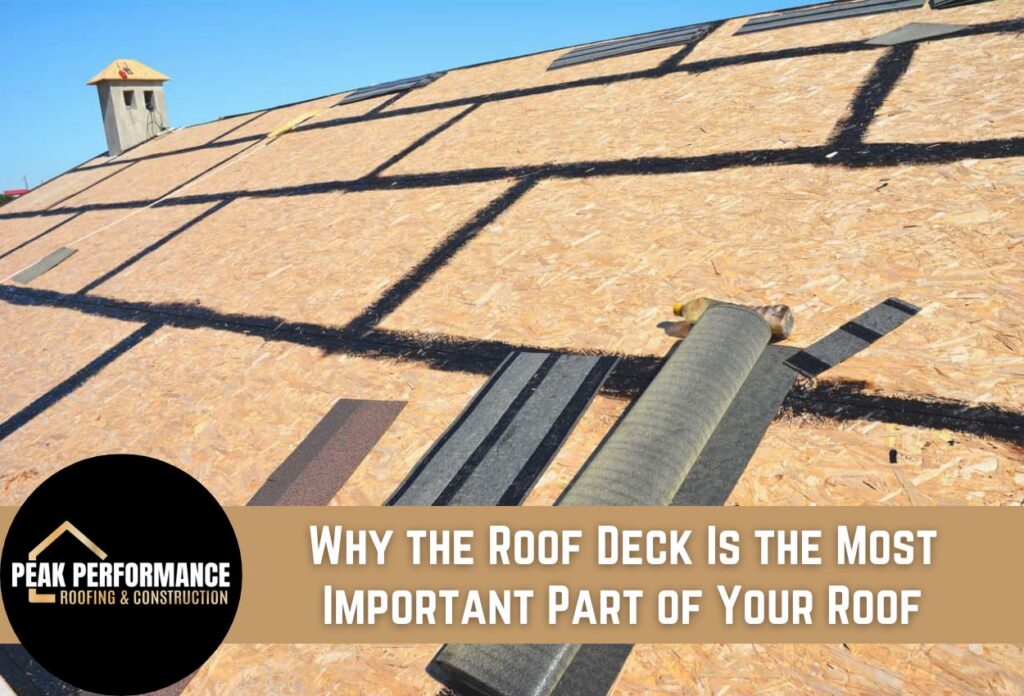

The roof deck is the structural base layer that every shingle, underlayment, and fastener depends on, and in Tulsa, where hailstorms average 5 to 7 per year and summer temperatures regularly push past 100 degrees Fahrenheit, a damaged deck causes the entire roofing system to fail faster than it should. It sits directly on top of the rafters and acts as the foundation for everything above it. Without a solid deck, even the best shingles money can buy will underperform.
Most homeowners focus on the shingles during a roof replacement. That makes sense, shingles are what you can see. But the roof deck is the one component most likely to be overlooked, even though it determines how long every other material lasts. Rot, moisture damage, or warped panels hiding underneath old shingles can quietly shorten a roof’s lifespan from 25 years down to far less.
This article covers what the roof deck does, how to spot signs it needs replacing, what thickness requirements apply in Tulsa, and what deck replacement costs to expect.
What Does a Roof Deck Do for Your Home’s Structural Integrity?
The roof deck performs four separate jobs at once, and losing any one of them puts the entire roof system at risk. First, it provides structural support for the shingles and underlayment stacked above it. Second, it acts as the nailing base that holds every fastener in place. Third, it works as a barrier layer against heat and moisture. Fourth, it functions as a diaphragm, a term engineers use to describe how a solid panel resists the racking forces that try to push a roof sideways during high winds. In Tulsa, where straight-line winds regularly exceed 60 mph, that last function matters more than most homeowners realize.
The nailing base function is more precise than it sounds. Roof deck panels must maintain a minimum fastener withdrawal resistance of 150 lbs per nail for shingles to meet wind-rated installation requirements, and a deck softened by moisture or rot can drop well below that threshold, leaving shingles vulnerable to blow-off even when they were installed correctly. Tulsa averages more than 40 inches of rainfall per year, which gives moisture plenty of chances to weaken deck panels from the inside.
How the Deck Works with Underlayment and Ventilation
The deck does not work alone. Ice-and-water shield membranes and felt underlayment are both fastened directly to the deck surface, so a flat, firm deck keeps those layers sealed properly. In winter, Tulsa’s freeze-thaw cycles can push water under shingles if the deck has any soft spots that break the membrane seal. In summer, poor attic ventilation can drive attic temperatures above 150 degrees, which accelerates deck panel degradation from below. A properly vented attic paired with a sound deck keeps heat and moisture from attacking the system from both directions.
What Are the Signs of a Damaged Roof Deck That Needs Replacing?
6 to 8 warning signs can indicate whether a roof deck needs partial repairs or full replacement. Some signs show up from outside the home. Others only appear when someone looks inside the attic. Both matter equally when sizing up the damage.
- Soft or spongy spots underfoot: When walking, the floor feels like stepping on a mattress; the OSB or plywood panel beneath has likely absorbed enough moisture to lose structural stiffness. Any detectable flex under normal foot traffic is worth flagging immediately.
- Visible sagging across the roofline: A dip greater than 1 inch across a 10-foot span signals that deck panels have warped, delaminated, or lost load-bearing capacity. Tulsa’s wide temperature swings between summer highs above 100 degrees and winter lows below freezing accelerate this kind of warping.
- OSB layer separation: Delamination, where the pressed wood layers visibly peel apart, means the panel’s bonding has broken down from repeated moisture exposure and cannot hold fasteners reliably.
- Dark staining or mold growth: Mold covering more than 10% of a single panel indicates sustained moisture exposure. Tulsa’s average relative humidity of 65% to 70% makes attic-side mold common even when no active roof leak exists.
- Granule loss exposing the deck surface: When shingle granules wear away, and bare deck material becomes visible below, the deck has lost its primary moisture shield and UV protection.
- Daylight visible through the roof decking: Any light entering through gaps in the deck boards when viewed from inside the attic means the structural layer has cracked, rotted through, or separated at the seams.
- Moisture staining on rafters: Brown or gray streaking running down rafter faces points to water tracking down from the deck above, a sign that the deck is no longer shedding moisture away from the framing.
- Rust streaks from nail shanks: Orange streaking around fastener heads inside the attic means the nails have been wet long enough to corrode, which reduces their holding power and confirms long-term moisture intrusion in that section of the deck.
The decision rule is straightforward: if a professional inspection finds damage across more than 20% of the deck panels, full deck replacement is typically recommended over spot repairs. Before approving any reroof job scale, request a written damage assessment from your contractor that identifies affected panel locations, damage type, and the percentage of deck area involved. A professional residential roof inspection is the most reliable way to get that documentation.
How Thick Should a Roof Deck Be for Shingles, and Does Material Type Matter?
The Type of material matters just as much as its thickness. Different decking materials and thicknesses perform differently under the same weather conditions, and the wrong choice can shorten your roof’s lifespan by years.
| Material | Minimum Thickness for Shingles | Span Rating | Moisture Resistance | Avg. Installed Cost (per sq. ft.) | Typical Lifespan (years) |
|---|---|---|---|---|---|
| OSB (7/16 inch) | 7/16 inch | 24/16 | Low prone to edge swelling | $1.50 to $2.25 | 20 to 30 |
| OSB (1/2 inch) | 7/16 inch | 32/16 | Low to moderate | $1.75 to $2.50 | 25 to 35 |
| Plywood (1/2 inch) | 3/8 inch | 32/16 | Moderate to high | $2.00 to $3.00 | 30 to 40 |
| Plywood (5/8 inch) | 3/8 inch | 40/20 | High | $2.50 to $3.75 | 35 to 50 |
| Solid Board Sheathing (1-inch nominal) | 3/4 inch actual | N/A continuous support | Moderate varies by wood species | $3.50 to $5.50 | 40 to 60 |
OSB costs less upfront, but in Tulsa’s climate, where moisture cycles from heavy spring rains and summer humidity are constant, OSB is more vulnerable to edge swelling and delamination than plywood. Those failures reduce nail holding power and void shingle warranties faster than most homeowners expect. When replacing damaged panels during a reroof in Tulsa, 1/2-inch plywood is the recommended upgrade over OSB. The added cost of $0.25 to $0.75 per square foot is minor compared to the longer service life and better moisture performance it delivers.
What Does Roof Deck Replacement Cost During a Reroof in Tulsa?
On a standard 1,500 to 2,000 sq ft Tulsa home, full deck replacement adds $1,500 to $11,000 on average to a reroof project, a range driven by material choice between OSB and plywood, roof pitch, and how easily a crew can access the damaged sections. That number sounds significant, but it shrinks considerably when storm damage is documented and submitted to a homeowner’s insurance claim with a contractor inspection report or public adjuster assessment. The table below breaks down cost expectations across three common damage scenarios.
| Scenario | Deck Area Affected | Est. Square Footage (1,500 to 2,000 sq ft home) | Material Cost (per sq ft) | Labor Cost (per sq ft) | Total Estimated Cost Range |
|---|---|---|---|---|---|
| Partial replacement spot damage | 10% to 25% | 150 to 500 sq ft | $1.50 to $3.75 | $1.00 to $1.75 | $375 to $2,750 |
| Half-deck replacement, moderate storm damage | 26% to 60% | 390 to 1,200 sq ft | $1.50 to $3.75 | $1.00 to $1.75 | $975 to $6,600 |
| Full deck replacement, severe rot, or hail impact | 61% to 100% | 915 to 2,000 sq ft | $1.50 to $3.75 | $1.00 to $1.75 | $1,500 to $11,000 |
Skipping necessary deck replacement to cut upfront costs is a trade-off that almost always loses. Leaving a compromised deck under new shingles typically shortens the shingle system’s lifespan by 5 to 10 years and voids most manufacturer warranties, turning a $2,000 savings today into an $8,000 to $15,000 premature full replacement within a decade.
Before finalizing the job scale of a reroof, ask Peak Performance Roofing & Construction for a written deck assessment that identifies damage type, affected panel locations, and the percentage of roof deck area involved so insurance documentation is ready from day one.
Is Investing in a Healthy Roof Deck Worth It for the Long-Term Value of Your Home?
A properly installed roof deck can extend the functional lifespan of an asphalt shingle roof in Tulsa from as few as 15 years, the typical outcome on a degraded or undersized deck, to the full rated lifespan of 25 to 30 years for architectural asphalt shingles. That difference represents 10 or more additional years of service life on a roofing system that costs $8,000 to $18,000 installed. Framed that way, the cost of replacing a compromised deck during a reroof is not an add-on expense. It is the investment that determines whether the entire system performs as expected.
The resale side of this equation is just as clear. A roof backed by documented deck replacement and a transferable manufacturer warranty, which ranges from 10 to 50 years depending on product tier, adds measurable value during a home sale or appraisal. Buyers and appraisers treat transferable warranties as proof that the system was installed correctly from the structure up, not just surfaced over whatever was already there.
For Tulsa homeowners in hail-prone zip codes like 74105, 74114, and 74136, a new roof with a certified, properly dimensioned deck documented with the insurer may qualify the home for reduced annual insurance premiums, turning a structural investment into ongoing yearly savings. Insurers treat a verified deck replacement as evidence of reduced risk. That documentation, submitted at the time of policy renewal, can lower premiums in ways that partially offset the original deck replacement cost over the life of the roof. Homeowners dealing with storm-related deck damage should also review the insurance claim process to ensure all documented damage is properly submitted.
Ready to Find Out if Your Roof Deck Needs Attention Before Your Next Roof?
Catching deck damage before a reroof begins is the single most cost-effective step a Tulsa homeowner can take. It’s the difference between a roof that lasts 25 to 30 years and one that fails in 15. A written deck condition assessment, completed before work starts, protects both your warranty and your insurance documentation from day one.
Peak Performance Roofing & Construction inspects Tulsa homes for hidden deck damage, the kind that doesn’t show up from the street but turns a routine reroof into a full replacement emergency. Get a professional assessment before that happens.
Schedule your free roof inspection.
Not ready to schedule? Learn more about residential roofing services.