 (918) 694-1483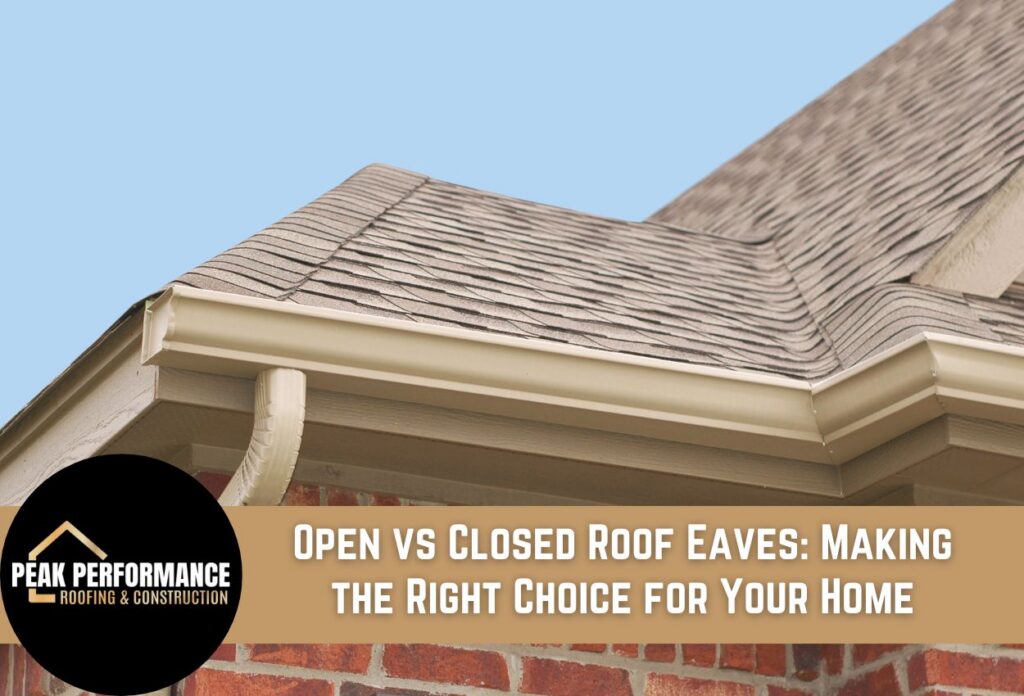
Key Points:
- Choosing between open and closed roof eaves profoundly impacts your home’s ventilation, appearance, and maintenance needs.
- Open eaves provide superior natural ventilation and a rustic look, but require pest protection and more visible maintenance.
- Closed eaves offer a clean appearance and better pest protection, though requiring planned ventilation and concealing issues.
Roof eave design plays an important role in both the curb appeal and functional performance of any home. Open and closed eave systems represent two distinct approaches to roof overhang construction, each offering unique advantages for different architectural needs and climate considerations.
Open eaves feature exposed rafters and allow direct airflow into the attic space, creating natural roof eave ventilation that helps regulate temperature and moisture levels. This eave construction type showcases the structural elements of the roof while promoting efficient attic ventilation systems.
Closed eaves incorporate soffit and fascia board differences that create a finished appearance by concealing the roof’s structural components. These roof overhang styles provide a clean, streamlined look while offering different ventilation and maintenance characteristics compared to their open counterparts.
The choice between open or closed roof eaves affects ventilation efficiency, maintenance requirements, pest protection, and overall home appearance. Understanding these fundamental differences helps homeowners make informed decisions that align with their specific building requirements, architectural preferences, and long-term performance expectations.
Ventilation Performance: How Each Eave Type Affects Airflow
The ventilation capabilities of open or closed roof eaves create significantly different airflow patterns that directly impact attic temperature regulation and moisture control. Open eaves naturally excel at roof eave ventilation by providing unrestricted pathways for air to enter the attic space through exposed rafter bays. This direct airflow helps create continuous ventilation that reduces heat buildup during summer and prevents moisture accumulation throughout the year.
Closed eave systems present ventilation challenges due to their enclosed design, where soffit and fascia boards can restrict natural airflow. However, these eave construction types can incorporate perforated or vented soffits to maintain proper attic ventilation systems. The key difference lies in how air moves through each system – open eaves allow immediate access while closed systems require strategic planning for adequate ventilation openings.
Both roof overhang styles can achieve effective ventilation when properly designed, but open eaves typically provide superior natural airflow without additional components. Closed eaves require careful consideration of vent placement and sizing to match the ventilation performance of open systems while maintaining their clean architectural appearance.
Construction Methods and Structural Considerations
Open eave construction involves exposing the roof’s structural rafters to create visible architectural elements that extend beyond the exterior wall. This eave construction type requires careful attention to rafter spacing, proper blocking between rafters for stability, and weather-resistant finishes on all exposed wood surfaces. The exposed rafters must be cut to precise lengths and angles to ensure a uniform appearance while maintaining structural integrity for the roof overhang styles.
Closed eave systems require additional components, including soffit panels and fascia boards to enclose the rafter spaces completely. The construction process involves installing horizontal soffit materials between the wall and fascia board, creating an enclosed cavity beneath the roof overhang. Soffit and fascia board differences become apparent during installation, as fascia boards attach to rafter ends while soffits span the horizontal space underneath.
Both open and closed roof eaves need proper flashing and drainage considerations to prevent leaks. Closed systems require additional planning for attic ventilation systems through strategic soffit vent placement, while open eaves naturally accommodate roof eave ventilation through their exposed design. The structural requirements remain similar, but material costs and installation complexity typically increase with closed eave construction due to additional finishing components needed for the enclosed appearance.
Maintenance Requirements and Longevity Factors
Open eave systems require regular attention to exposed structural elements that face direct weather exposure throughout the year. The visible rafters and blocking materials need periodic inspection for signs of rot, insect damage, or weathering that can compromise both appearance and structural integrity. Access for repairs proves relatively straightforward since all components remain visible and reachable, but the constant exposure to moisture, UV rays, and temperature fluctuations requires more frequent maintenance cycles for these roof overhang styles.
Closed eave maintenance focuses primarily on soffit and fascia board care, where soffit panels may develop cracks, warping, or paint deterioration over time. The enclosed design of these eave construction types creates potential moisture issues when attic ventilation systems become blocked or insufficient, leading to condensation problems within the soffit cavity. Regular cleaning of soffit vents ensures proper roof eave ventilation continues functioning effectively.
Both open and closed roof eaves benefit from annual inspections, but closed systems may hide developing problems longer due to their concealed construction. Open eaves typically show maintenance needs immediately, while closed eave problems often become apparent only after moisture damage has begun affecting the enclosed areas behind soffit materials.
Pest Protection and Weather Resistance Comparison
Open eaves create natural entry points for birds, insects, and small animals due to their exposed rafter bays and unrestricted access to attic spaces. These gaps between rafters provide convenient nesting sites for birds and allow easy access for bats, squirrels, and various insects seeking shelter. Blocking materials installed between rafters can reduce these entry points, but complete pest exclusion remains challenging with open eave construction types. Hardware cloth or screening materials offer effective solutions when installed across rafter openings while maintaining roof eave ventilation capabilities.
Closed eave systems excel at blocking pest access through their enclosed soffit design, creating physical barriers that prevent unwanted wildlife from entering attic areas. The continuous soffit panels eliminate the gaps present in open systems, though proper installation is important to prevent small openings. However, closed eaves may experience challenges during extreme weather when trapped moisture cannot escape as readily as through open systems.
Weather resistance varies between the two roof overhang styles, with open eaves allowing immediate drainage of any moisture accumulation, while closed systems must rely on proper attic ventilation systems to manage humidity levels. Strong winds can drive rain into open rafter bays, while closed eaves provide better protection against wind-driven precipitation but may trap moisture if ventilation proves inadequate.
Energy Efficiency and Climate Control Impact
The thermal performance differences between open and closed roof eaves significantly influence home energy efficiency and climate control effectiveness. Open eave systems promote superior natural cooling through enhanced air movement that draws hot air from attic spaces during the summer. This continuous roof eave ventilation creates a stack effect where cooler outside air enters through lower openings while heated air escapes through ridge vents or other high exhaust points, reducing the cooling load on HVAC systems.
Closed eave construction affects insulation performance differently due to potential thermal bridging where rafters extend through the building envelope. These eave construction types can create challenges for achieving continuous insulation coverage, particularly at the transition between wall and roof assemblies. However, closed systems often provide better opportunities for air sealing when properly installed with appropriate vapor barriers and weatherization materials.
The energy consumption patterns vary significantly between roof overhang styles, with open eaves typically reducing summer cooling costs through improved attic ventilation systems. Closed eaves may offer better winter performance when designed with continuous insulation strategies that minimize heat loss.
Curb Appeal and Architectural Style Integration
The visual impact of open or closed roof eaves varies dramatically across different architectural styles, with each eave construction type offering distinct appearance advantages for specific design approaches. Open eaves complement rustic and craftsman architectural styles by showcasing exposed structural elements that emphasize natural materials and traditional building techniques. The visible rafters create strong shadow lines and add visual depth to roof overhang styles, particularly effective in mountain, cabin, or contemporary designs that celebrate structural honesty.
Traditional architectural styles often favor open eave systems for their authentic appearance and historical accuracy. Ranch-style homes, lodge designs, and prairie-inspired architecture benefit from the horizontal emphasis that exposed rafters provide. The natural wood tones and structural rhythm create appealing visual patterns that enhance the overall architectural character while supporting effective attic ventilation systems.
Closed eave designs excel in creating clean, sophisticated appearances that suit modern and contemporary architectural styles perfectly. Colonial, Georgian, and formal traditional styles also benefit from closed eaves, as the polished finish provides the refined appearance these architectural approaches need while maintaining proper roof eave ventilation through strategically placed soffit vents.
Choose Peak Performance Roofing & Construction for Your Eave Needs
Deciding between open and closed roof eaves is important for the functionality, appearance, and durability of your home. Each type offers unique benefits and challenges, from ventilation performance to pest protection and maintenance requirements. If you’re weighing your options and need expert advice tailored to your home’s specific needs, consider consulting with professionals who understand local climates and building requirements.
Don’t let the complexity of choosing between open and closed roof eaves overwhelm you. Call us today at (918) 694-1483 to discuss your roofing needs and how we can help elevate your home’s roof to its peak performance.