 (918) 694-1483

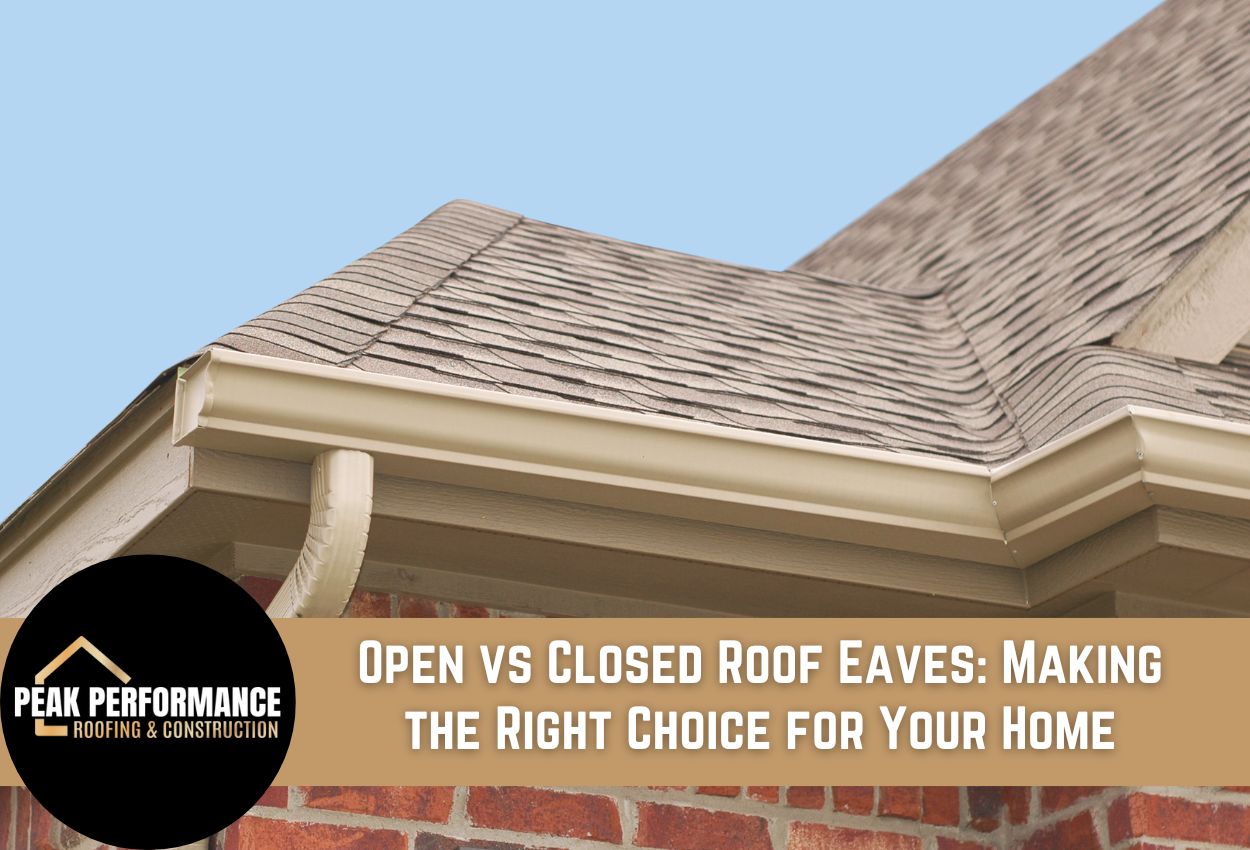
Fascia boards serve as the first line of defense between roof edges and the elements, protecting rafters, roof decking, and interior spaces from water intrusion and pest invasion. These horizontal boards running along the roofline support gutters and create a finished appearance, but constant exposure to rain, snow, and temperature fluctuations takes a toll. Recognizing signs of fascia board damage early prevents minor issues from escalating into expensive structural repairs affecting the entire roofing system.
Homeowners often overlook fascia boards until visible deterioration appears, yet subtle warning signs emerge long before complete failure occurs. Water damage on fascia board manifests through discoloration, soft spots, and peeling paint, while signs of rotting fascia boards include crumbling wood and visible decay. Pest activity, sagging sections, and separation from the roofline signal deteriorating fascia board warning signs that require immediate attention. Understanding when to replace fascia boards and pursuing fascia board repair requires accurate identification of damage severity and extent, protecting both property value and structural integrity.
Visible Discoloration and Staining on fascia boards
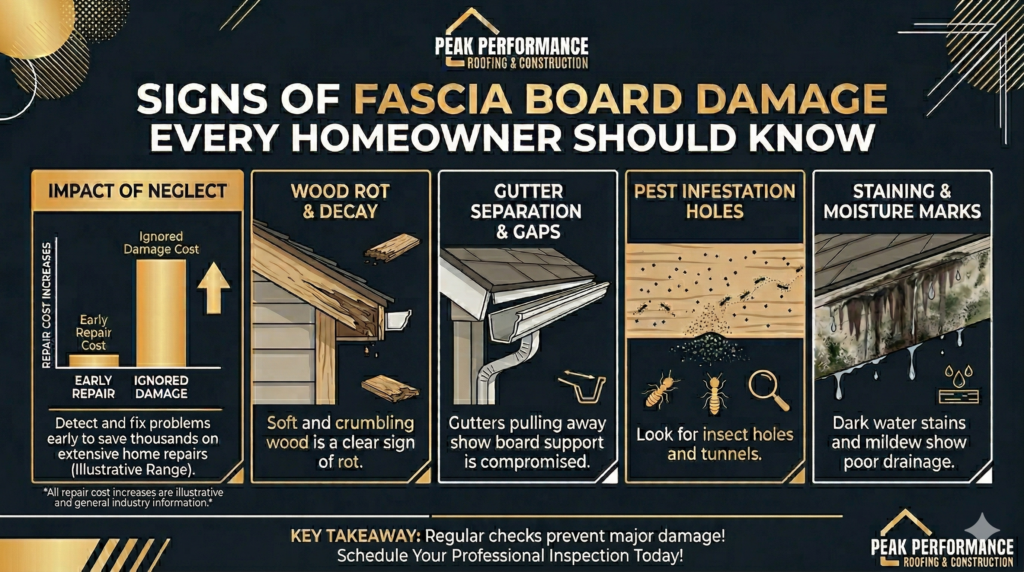
Dark streaks running vertically down fascia boards indicate water has leaked behind the surface material and is actively deteriorating the wood beneath. These stains typically appear brown, black, or gray and signal that moisture has bypassed protective paint or sealant layers. Water stains often concentrate near gutter attachment points or roof edges, where drainage problems allow standing water to seep into vulnerable areas. Discolored patches that spread over time confirm ongoing leaks rather than isolated surface staining from dirt or debris.
Paint that bubbles, peels, or cracks across fascia board surfaces reveals underlying wood rot or persistent moisture damage requiring immediate inspection. Bubbling occurs when trapped moisture pushes outward against paint layers, while peeling indicates the wood deck has become too compromised to hold finishes. Cracked paint exposing bare wood accelerates deterioration by allowing direct water absorption into unprotected material. These deteriorating fascia board warning signs demonstrate that cosmetic touch-ups will not address the core problem, and a thorough evaluation determines whether targeted fascia board repair or complete replacement becomes necessary to prevent structural complications.
Soft or Crumbling Wood Texture
Physical testing reveals the true condition of fascia boards when visual inspection alone cannot determine damage severity. Pressing firmly against the fascia board surface with a finger or screwdriver should meet solid resistance in healthy wood. Soft spots that indent under pressure indicate that advanced rot has compromised the wood’s structural integrity. Sponginess when pushing on the board demonstrates that moisture has broken down the wood fibers internally, even when the outer surface appears relatively intact. These signs of rotting fascia boards require immediate attention before the decay spreads to adjacent structural components.
Wood that crumbles, flakes, or separates into fragments when touched confirms the fascia board has lost its load-bearing capacity and can no longer support gutters or protect roof edges effectively. Fibers that pull apart easily or turn to powder signal complete deterioration of the wood’s cellular structure. This level of water damage on a fascia board leaves no option for simple repairs, as the material cannot be restored once structural breakdown occurs. Recognizing when to replace fascia boards at this stage prevents gutter detachment, roof edge exposure, and potential water intrusion into the home’s interior spaces.
Gaps Between Fascia Boards and Gutters
Visible separation between gutters and fascia boards signals that mounting hardware has lost its grip due to wood deterioration beneath the attachment points. A healthy fascia board provides solid anchoring for gutter brackets and hangers, but as moisture compromises the wood, fasteners pull loose and create expanding gaps. These openings typically start small and widen progressively as the weakened material continues breaking down around screws and nails. Water damage on a fascia board directly affects its ability to secure gutter systems, leading to sagging sections and improper drainage that accelerates further deterioration.
Spaces appearing between the fascia board and roofline create entry points for water, insects, and small animals seeking access to protected areas behind the boards. Even narrow gaps allow rainwater to flow directly onto exposed wood surfaces and into wall cavities, bypassing designed drainage systems entirely. Wasps, hornets, and carpenter bees frequently exploit these openings to build nests in sheltered spaces, while squirrels and mice use larger separations to access attic areas. These deteriorating fascia board warning signs indicate structural movement or wood shrinkage from repeated wetting and drying cycles, conditions that get worse without intervention and ultimately determine when to replace fascia boards rather than attempting temporary fascia board repair solutions.
Presence of Mold, Mildew, or Fungal Growth
Green, black, or white organic growth appearing on fascia board surfaces provides clear evidence of persistent moisture problems that have created ideal conditions for biological colonization. Mold typically manifests as dark patches or streaks, while mildew presents as powdery white or gray deposits that spread across painted or bare wood surfaces. These organisms require sustained dampness to establish themselves, meaning their presence confirms water damage on the fascia board rather than temporary exposure to rain. The longer these growths remain undisturbed, the deeper they grow into the wooden deck, accelerating decay and compromising structural integrity.
Mushroom-like growths protruding from fascia boards or soft, powdery substances coating the wood indicate advanced rot that has transformed the material into a nutrient source for fungi. These fruiting bodies only appear after extensive internal decomposition has occurred, signaling that signs of rotting fascia boards have progressed beyond the early stages. Fungal colonization releases enzymes that break down cellulose and lignin within wood fibers, creating soft, spongy areas that crumble easily. Once fungi establish this level of activity, determining when to replace fascia boards becomes urgent, as the decay spreads rapidly to adjacent sections and threatens the entire roofline’s stability.
Pest Infestation and Visible Holes
Small, round holes appearing in fascia boards, accompanied by piles of fine sawdust below, indicate active wood-boring beetle, carpenter ant, or termite infestations taking advantage of compromised material. Carpenter ants excavate smooth tunnels through softened wood damaged by moisture, leaving behind distinctive sawdust trails and hollowed sections that weaken structural integrity. Termites create mud tubes along fascia board surfaces and consume wood from the inside out, often leaving only a thin outer shell that collapses under minimal pressure. Wood-boring beetles drill perfectly circular exit holes after larvae have consumed interior wood fibers, creating a honeycomb pattern of tunnels that drastically reduces load-bearing capacity. These pests specifically target areas showing signs of rotting fascia boards because deteriorated wood is easier to excavate and provides the moisture levels insects need to thrive.
Birds pecking at damaged fascia board sections or rodents gnawing enlarged holes in weakened areas transform minor deterioration into major access points for nesting behind the roofline. Woodpeckers instinctively recognize the hollow sound of rotted wood and create large openings while searching for insects already inhabiting compromised boards. Squirrels and mice exploit existing cracks or soft spots in deteriorating fascia board, widening them to gain entry into attic spaces and wall cavities. These animal activities not only expand existing water damage on the fascia board but also introduce additional moisture through nesting materials and waste. Observing wildlife activity concentrated around specific fascia board sections provides immediate confirmation that fascia board repair or replacement has become necessary to restore the protective barrier and prevent interior damage.
Making the Decision Between Repair and Replacement
Determining whether isolated sections of damaged fascia board can be repaired or whether full replacement becomes necessary depends on the extent and location of deterioration. Limited damage confined to small areas without structural compromise may qualify for fascia board repair through selective board replacement and reinforcement of adjacent sections. If rot, water damage on a fascia board, or pest activity affects less than 25% of the total length and the surrounding wood remains solid, targeted repairs often provide cost-effective solutions. However, when signs of rotting fascia boards appear across multiple sections, or damage extends to the supporting rafters and roof decking, replacement prevents recurring problems and delivers better long-term value.
Professional assessment becomes essential when deteriorating fascia board warning signs indicate widespread damage, or homeowners lack confidence in accurately evaluating structural conditions. Roofing professionals possess specialized knowledge to identify hidden moisture damage, assess load-bearing capacity, and recognize patterns that suggest systemic drainage or ventilation issues contributing to fascia board failure. Understanding when to replace fascia boards requires evaluating factors, including damage severity, material availability, labor costs for partial or complete replacement, and whether gutter systems need simultaneous upgrading. Qualified contractors provide detailed assessments that outline repair and replacement options, helping property owners make informed decisions that protect structural integrity and prevent future complications.
Protect Your Home with Peak Performance Roofing & Construction
If you’ve noticed any signs of fascia board damage, such as rotting, water stains, or fungal growth, it’s important to address these issues quickly to prevent further damage to your home. At Peak Performance Roofing & Construction, we specialize in diagnosing and resolving all types of fascia board problems, ensuring your home remains safe and well-maintained.
Call us today at (918) 694-1483 or visit our website at https://peakprc.com/ for a thorough inspection and professional fascia board services tailored to your needs.