 (918) 694-1483
 Asphalt Shingle Roofing Services in Tulsa, OK, Local Experts You Can Trust
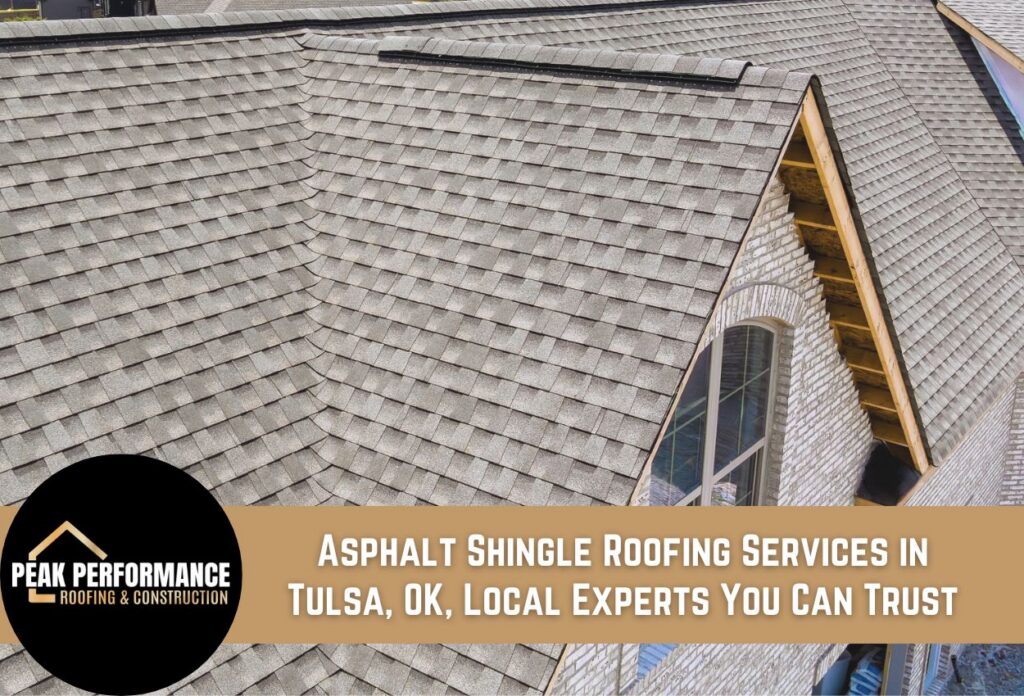

Asphalt shingles cover the majority of residential roofs in Tulsa, OK, and for good reason. They hold up against hail, resist wind gusts that can exceed 70 mph, and handle intense summer UV exposure better than most other affordable roofing materials. For Tulsa homeowners, asphalt shingle roofing services are not just a common choice. They are a practical response to one of the toughest climates in the country.
Asphalt shingle roofing services cover a wide range of work: new installations, full roof replacements, storm damage repairs, routine inspections, and ongoing maintenance. Each of these services plays an important role in keeping a home protected through Tulsa’s seasonal extremes, from spring hailstorms to scorching summer heat above 100 degrees Fahrenheit.
Tulsa sits in Tornado Alley, which means severe weather from March through June is not an occasional surprise, it is an annual reality. That makes shingle quality and contractor expertise matter more here than in many other parts of the country. Choosing the wrong shingle or an underqualified installer can leave a roof vulnerable fast.
This article covers everything Tulsa homeowners need to know about asphalt shingle roofing, from material types and costs to installation timing and what to look for in a contractor.
What Types of Asphalt Shingles Are Available for Tulsa Homes?
Tulsa homeowners have 3 main asphalt shingle categories to choose from: 3-tab, architectural (also called dimensional or laminated), and premium (designer), each with different lifespans, costs, and performance ratings that matter in a hail-prone climate.
| Shingle Type | Typical Lifespan | Wind Resistance | Impact Resistance | Approx. Cost per Square | Best Use for Tulsa |
|---|---|---|---|---|---|
| 3-tab | 15 to 20 years | 60 to 70 mph | Class 1 to Class 2 | $80 to $100 | Budget replacements on low-risk, low-slope roofs |
| Architectural (laminated) | 25 to 30 years | 110 to 130 mph | Class 2 to Class 3 | $100 to $150 | Ranch-style and two-story homes: the best balance of cost and durability |
| Premium (designer) | 30 to 50 years | 130+ mph | Class 3 to Class 4 | $150 to $250 | Upscale homes: maximum storm protection for hail-heavy seasons |
Architectural and laminated shingles have become the regional standard across Tulsa. Their multi-layer construction handles wind uplift far better than 3-tab shingles, and their varied texture works well on the ranch-style and two-story wood-frame homes that make up most of the local housing stock. For homes in hail-prone areas, upgrading to Class 4 impact-resistant shingles available in both architectural and premium lines is one of the most valuable steps a Tulsa homeowner can take, especially given that severe hailstorms hit the region regularly from March through June. Many insurance carriers also offer premium discounts for Class 4-rated roofs, which can offset the higher upfront cost over time.
Why Does Tulsa’s Climate Make Asphalt Shingle Roofing a Top Choice?
Asphalt shingles dominate Tulsa’s residential roofing market because no other affordable material addresses all four of the city’s major climate threats: 40 inches of annual precipitation, summer highs of 90 to 95 degrees, humidity averaging 60% to 70%, and wind gusts exceeding 70 mph as consistently or as cost-effectively. Each of those conditions puts a different kind of stress on a roof. Asphalt shingles are built to handle all of them together.
How Asphalt Shingles Handle Tulsa’s Toughest Conditions
Fiberglass mat construction, the core of most modern asphalt shingles, resists UV breakdown better than older organic-mat shingles. That matters when the summer sun beats down on South Tulsa and Midtown rooftops day after day. Granule coatings embedded in the shingle surface also act as a shield against that UV exposure, slowing the degradation that shortens a roof’s lifespan. For Green Country’s humidity problem, many shingles now include copper-infused or algae-resistant granules that stop the dark streaking common on roofs in this region. High-wind ratings on architectural and premium shingles reaching 110 to 130 mph and above address Tornado Alley conditions directly, giving homeowners real protection during the March through June severe weather season.
How Asphalt Compares to Metal and Tile in This Market
Metal roofing and tile both perform well in certain climates, but each comes with trade-offs that make them less practical for most Tulsa homeowners. Tile adds significant structural weight that many wood-frame homes built between the 1950s and 2000s are not designed to support. Metal roofing costs more upfront and can be noisy during the hailstorms that hit this area every spring. Asphalt shingles, by contrast, install quickly, cost less per square, and come in Class 4 impact-resistant options that match the storm protection needs of Tulsa neighborhoods without requiring structural modifications or a larger budget.
What Are the Most Common Asphalt Shingle Roof Problems Tulsa Homeowners Face?
Tulsa roofs face six recurring problems driven directly by the region’s weather, and knowing which ones signal a repair versus a full replacement can save homeowners thousands of dollars. Schedule a professional roof inspection after any storm producing hail larger than 1 inch or sustained winds above 60 mph. Tulsa’s severe spring storm season runs March through June, meaning that threshold gets crossed multiple times most years.
- Hail impact damage (granule loss and bruising): Hailstones larger than 1 inch knock granules loose and bruise the shingle mat underneath, exposing the asphalt to UV breakdown. From the ground, look for dark bare spots or heavy granule buildup in gutters after a storm. Isolated impact damage is often repairable, but widespread bruising across multiple roof sections typically points to full replacement.
- Wind-lifted or missing shingles: Gusts exceeding 70 mph, common in Tulsa’s spring storms, can break the seal strip on shingles and lift or tear them away entirely. Missing shingles are visible from the ground. Small sections of lifted shingles are repairable: extensive lifting across the field of the roof usually means replacement is the smarter call.
- UV-accelerated cracking and curling: Summer highs of 90 to 95 degrees, combined with intense sun exposure, dry out shingle asphalt over time. Curling edges and surface cracking become visible from the ground on older roofs. This type of deterioration is a sign of aging and rarely warrants repair: it points toward replacement.
- Algae and moss growth from humidity: Tulsa’s average relative humidity of 60% to 70% creates ideal conditions for algae streaking and moss buildup, especially on north-facing roof slopes. Dark black or green streaks are visible from the ground. Algae and moss growth is treatable with soft-wash cleaning, making it one of the few problems that does not immediately require replacement.
- Flashing failures around chimneys and vents: Repeated temperature swings between Tulsa’s summer highs and winter lows of 25 to 35 degrees cause flashing metal to expand and contract, loosening seals over time. Water stains on interior ceilings near chimneys or vents are the most common warning sign. Flashing failures are localized and repairable in most cases.
- Aging and end-of-life deterioration: Most architectural shingles last 25 to 30 years, while 3-tab shingles reach the end of life at 15 to 20 years. Tulsa’s housing stock, heavily built between the 1950s and 2000s, means many roofs are already approaching or past those thresholds. When a roof shows multiple failure signs across all sections at once, age-related deterioration has likely set in, and full replacement is the right answer rather than repeated spot repairs.
Most single-area problems like flashing failures, missing shingles, and algae growth are repairable if caught early. Problems spread across the entire roof, especially on a structure 20+ years old, almost always make full replacement the more cost-effective decision in the long run.
How Much Does Asphalt Shingle Installation Cost in Tulsa, Oklahoma?
Asphalt shingle installation in Tulsa typically runs from $4,500 to $18,000 or more for a full roof replacement on a 1,500 to 2,500 square foot roof area, depending on shingle tier, labor, and project conditions, and the differences between tiers are significant enough to change a homeowner’s long-term return.
| Shingle Tier | Material Cost per Square | Labor Cost per Square | Total Cost (1,500 sq ft roof) | Total Cost (2,500 sq ft roof) |
|---|---|---|---|---|
| 3-tab (budget) | $80 to $100 | $75 to $100 | $4,500 to $6,000 | $7,000 to $10,000 |
| Architectural/laminated (mid-range) | $100 to $150 | $75 to $110 | $5,500 to $8,000 | $9,000 to $13,000 |
| Premium / Class 4 impact-resistant (high-end) | $150 to $250 | $100 to $130 | $7,500 to $11,500 | $12,500 to $18,000+ |
Additional Cost Factors to Budget For
Material and labor are only part of the total. These line items add real dollars to most Tulsa roof replacement projects:
- Tear-off and disposal of old roofing: $1,000 to $2,500, depending on roof size and number of existing shingle layers
- Roof deck repair or replacement: $70 to $100 per sheet of plywood where rot or damage is found
- Underlayment upgrade (synthetic over felt): $0.10 to $0.25 per square foot added cost
- Ice-and-water shield: $1.00 to $1.50 per square foot, typically applied at eaves and valleys
- Flashing replacement (chimney, vents, valleys): $200 to $500, depending on the job scale
- Tulsa County building permit fees: $100 to $400 for most residential roof replacements
- Contractor markup on materials: Typically 15% to 30% above the material invoice, already reflected in most written estimates
How Insurance Claims Affect What You Pay Out of Pocket
Many asphalt shingle roof replacements in Tulsa are partially or fully covered under homeowners’ insurance when hail or wind damage is properly documented. Given that Tulsa sits in Tornado Alley and faces severe storms from March through June each year, insurance claims are common, and many homeowners pay only their deductible after a qualifying storm. Documenting hail larger than 1 inch or sustained winds above 60 mph with a professional inspection report strengthens a claim considerably.
Upgrading to Class 4 impact-resistant shingles during an insurance-funded replacement costs relatively little extra out of pocket, yet many carriers offer ongoing premium discounts for Class 4-rated roofs, making the upgrade one of the smartest financial decisions a Tulsa homeowner can make after storm damage. Reputable asphalt shingle roofing contractors in Tulsa, including Peak Performance Roofing & Construction, provide free inspections and detailed written estimates. Always compare bids on identical scale-of-work terms, the same shingle tier, underlayment type, and included line items so cost comparisons are accurate.
Repair or Replace? How to Decide What Your Tulsa Roof Really Needs
If three or more of the following diagnostic thresholds apply to your roof, full replacement delivers better long-term ROI than continued repairs. Fewer than two triggered thresholds typically means asphalt shingle roof repair is the right call.
- Roof age over 15 to 20 years: 3-tab shingles reach the end of their lifespan at 15 to 20 years. Architectural shingles last 25 to 30 years. A roof under 10 years old with isolated damage is almost always a repair candidate. One pushing past those age thresholds is not.
- More than 30% of the surface is damaged: When less than 30% of the surface of the roof shows damage, targeted repairs make sense. Damage covering more than 30% of the total surface area shifts the math firmly toward replacement.
- Soft or rotted roof decking underneath: Roof deck repairs run $70 to $100 per sheet of plywood. Finding rot or soft spots across multiple sections signals deeper structural failure, not a one-time patch situation.
- Two or more prior repairs in the last 5 years: Repeated spot repairs on the same roof signal that the system as a whole is breaking down. Stacking repair costs on an aging roof rarely beats the long-term value of a single replacement.
- An open or pending insurance claim: When a qualifying storm, such as hail larger than 1 inch or sustained winds above 60 mph, has already triggered a claim, the replacement scale is often fully or partially covered. Repairing instead of replacing in that situation may leave money on the table.
One important factor many Tulsa homeowners miss: widespread granule loss from hail is often invisible from the ground. Tulsa’s frequent spring hailstorms can strip granules across an entire roof slope without a single missing shingle showing from the street, making a professional inspection the recommended first step regardless of how minor the damage appears. A free inspection from a reputable contractor like Peak Performance Roofing & Construction gives you the documented evidence needed to make this decision and to support an insurance claim if replacement turns out to be the right answer.
What Does the Asphalt Shingle Roof Replacement Process Look Like in Tulsa?
A full asphalt shingle roof replacement in Tulsa follows 12 sequential steps, from the initial inspection through the final walkthrough, and most average-sized homes complete the entire process, permit included, within 1 to 2 weeks. Knowing what happens at each stage helps homeowners plan and avoid surprises.
| Phase | What Happens | Typical Duration |
|---|---|---|
| 1. Inspection & damage assessment | Contractor examines the roof decking, shingles, flashing, and gutters: documents findings | 1 to 2 hours |
| 2. Written estimate & material selection | Homeowner reviews itemized bid: selects shingle tier, color, and underlayment type | 1 to 3 days |
| 3. Permit application | Contractor files with Tulsa County on the homeowner’s behalf | 3 to 5 business days |
| 4. Scheduling & material delivery | Installation date confirmed: shingles and supplies delivered to the property | 1 to 2 days before install |
| 5. Old roof tear-off | Existing shingles and underlayment stripped: debris loaded for haul-away | Half day to 1 full day |
| 6. Roof deck inspection & repair | Exposed roof decking checked for rot or soft spots: damaged sheets replaced at $70 to $100 per sheet | 1 to 4 hours |
| 7. Underlayment installation | Synthetic or felt underlayment applied: ice-and-water shield added at eaves and valleys | 2 to 4 hours |
| 8. Shingle installation | 6-nail fastening pattern applied per Oklahoma wind zone requirements | 1 to 2 days |
| 9. Flashing & ridge cap completion | New flashing installed at the chimney, vents, and valleys: ridge cap sealed | 2 to 4 hours |
| 10. Cleanup & haul-away | Magnetic nail sweep, debris removal, and yard inspection completed | Same day as installation |
| 11. Final inspection & walkthrough | Contractor and homeowner review finished roof: code compliance confirmed | 1 to 2 hours |
Why 6 Nails Matter in Tulsa
Oklahoma’s wind zone requirements call for a 6-nail fastening pattern on every shingle rather than the 4-nail pattern common in lower-risk regions. 4 nails meet code in areas with moderate wind exposure, but Tulsa sits in a region where severe thunderstorms and tornadoes produce sustained winds that can exceed 60 mph from March through June. The 6-nail pattern increases the holding strength per shingle and is one of the main installation details that separates a roof built to last in Tulsa from one that lifts during the first major storm. When reviewing bids, ask contractors to confirm their fastening pattern in writing.
What a Reputable Contractor Handles for You
Top asphalt shingle roofing companies in Tulsa coordinate the Tulsa County permit application directly, so homeowners do not have to track down forms or make trips to the permit office. They also conduct a post-installation walkthrough to confirm the work meets local code before closing out the job. Peak Performance Roofing & Construction follows this full process on every project, from documented inspection to final sign-off.
Understanding each phase before work begins makes it easier to hold any contractor accountable to a clear schedule and scale of work.
What Permits and Regulations Apply to Asphalt Shingle Roofing in Tulsa, OK?
Any contractor performing asphalt shingle work in Tulsa must hold a valid Roofing Contractor classification license issued by the Oklahoma Construction Industries Board, and homeowners can verify any license number for free through the CIB’s public online lookup tool before signing anything. This is not optional. Oklahoma law requires it for all roofing work performed for compensation.
Building permits are also required for most residential roof replacements in Tulsa County. Oklahoma follows wind zone standards based on International Building Code guidelines, and Tulsa falls within a 115 mph wind zone designation. That wind rating drives specific installation requirements, and a permitted job ensures those standards are inspected and confirmed. Tulsa County building permit fees for most residential roof replacements run $100 to $400, a small cost compared to what a failed inspection can create down the road.
Hiring an unlicensed contractor puts far more at risk than the job itself. Voided manufacturer warranties, failed municipal inspections, denied insurance claims, and personal liability exposure can all follow from a single bad hiring decision. Manufacturer warranties require licensed installation to remain valid. If an inspector finds the work does not meet code, the homeowner, not the contractor, may be left responsible for bringing it up to standard.
Before signing any contract, confirm that all asphalt shingle roofing contractor candidates in Tulsa are fully licensed, bonded, and insured. Ask for the CIB license number, proof of general liability insurance, and workers’ compensation coverage. Peak Performance Roofing & Construction carries all required credentials and pulls permits on every job, so homeowners do not have to manage that process themselves.
When Is the Best Time of Year to Schedule Asphalt Shingle Roofing in Tulsa?
Spring (March through May) and fall (September through November) are the best windows for asphalt shingle installation in Tulsa. Shingles seal and cure most effectively when ambient temperatures fall between 45 degrees and 85 degrees, a range that matches Tulsa’s transitional seasons closely. Getting the timing right affects not just material performance, but also how quickly you can get a crew scheduled.
| Season | Temperature Range | Installation Conditions | Typical Scheduling Lead Time |
|---|---|---|---|
| Spring (March to May) | 45 degrees to 80 degrees Fahrenheit | Good shingles seal well: storm risk is high | 4 to 8 weeks after major hailstorms |
| Summer (June to August) | 90 degrees to 100 degrees+ | Poor shingles soften: adhesive strips may pre-seal | 1 to 3 weeks (lower demand) |
| Fall (September to November) | 50 degrees to 80 degrees | Best stable temps, lower contractor demand | 1 to 2 weeks |
| Winter (December to February) | 25 degrees to 50 degrees | Poor freezing temps slow sealant curing: shingles become brittle | Under 1 week (lowest demand) |
Summer heat creates real problems. When temperatures push past 100 degrees, shingles become too soft to handle correctly, and adhesive strips can pre-seal before proper alignment, locking in installation errors. Winter brings the opposite problem. Freezing temperatures slow or stop sealant curing entirely, and cold shingles crack more easily during handling.
Post-hail-storm surges in Tulsa typically create 4 to 8 week backlogs with the best asphalt shingle roofing companies, so scheduling an inspection fast after any major storm is the single most important step a homeowner can take. Late spring and early summer, right when Tulsa’s severe weather season peaks, are when contractor schedules fill the fastest. Fall offers the strongest combination of good installation conditions and shorter wait times. If a spring storm has already hit your neighborhood, contact a reputable contractor like Peak Performance Roofing & Construction right away to secure your place in the schedule before the backlog builds.
How Long Do Asphalt Shingle Roofs Last in Tulsa’s Climate?
3-tab shingles last 15 to 20 years in Tulsa, architectural shingles last 25 to 30 years, and premium or impact-resistant shingles can reach 30 to 50 years, but all of those ranges run shorter than manufacturer ratings in milder climates because of Tulsa’s hail exposure, UV intensity, and summer humidity. A manufacturer might rate a shingle for 30 years under average conditions, but local weather puts more stress on the material year after year, and the real-world lifespan reflects that.
A few maintenance habits make a measurable difference in how long a roof holds up. Annual professional inspections catch small problems, such as lifted flashing, cracked sealant, and a handful of damaged shingles, before they become water damage inside the home. Cleaning gutters at least twice a year stops moisture from backing up under the eaves. Roofs in shaded or low-airflow spots are also more likely to develop algae, which breaks down shingle granules faster and can cut years off a roof’s life if left untreated. Algae-resistant shingles or periodic treatment with a zinc-based wash can slow that process down.
How Warranties Work With Installer Certification
Manufacturer warranties are split into two categories: material coverage and workmanship coverage. Material warranties typically run 25 to 50 years, depending on the shingle tier. Workmanship warranties, which cover installation errors, are much shorter when a contractor is not manufacturer-certified, sometimes as low as 1 to 2 years.
Manufacturer-certified installers unlock enhanced warranty coverage that standard contractors cannot offer. That enhanced coverage often extends both the material and workmanship terms and may include coverage against wind damage up to 130 mph or more. The best asphalt shingle roofing companies in Tulsa hold manufacturer certification specifically because it gives homeowners stronger protection over the life of the roof. Peak Performance Roofing & Construction pursues that certified status so every installation qualifies for the full warranty the manufacturer makes available.
How Can Tulsa Homeowners Save Money on Asphalt Shingle Roofing?
Upgrading to Class 4 impact-resistant shingles is the single highest-value money-saving move available to Tulsa homeowners. Many Oklahoma insurers offer 20% to 30% reductions on homeowners insurance premiums for homes with qualifying impact-resistant roofs. The six strategies below can meaningfully reduce what you pay, both upfront and over the life of the roof.
- File an insurance claim quickly after storm damage: Report hail or wind damage to your insurer within 48 to 72 hours of a storm. Delayed claims can complicate coverage approval, and post-hail contractor backlogs of 4 to 8 weeks mean starting the process fast keeps your schedule on track.
- Get 3 written estimates on identical job scales: Ask at least 3 licensed contractors to bid on the same materials, fastening pattern, and warranty terms. Comparing apples to apples reveals true cost differences instead of hidden gaps.
- Schedule in fall or early winter for potential discounts: Contractor demand drops in September through February. Shorter wait times and lower workloads during that window often translate to better pricing and faster scheduling.
- Upgrade to Class 4 impact-resistant shingles: The 20% to 30% insurance premium reduction available through many Oklahoma insurers can offset a meaningful portion of the upgrade cost within just a few years, making this one of the few roofing decisions that pays back directly through lower annual costs.
- Bundle gutter or ventilation work with your roof replacement: Contractors typically reduce per-project mobilization costs when multiple jobs run at once. Combining gutter replacement or attic ventilation upgrades with a roof replacement usually costs less than scheduling each separately.
- Choose architectural shingles over premium tiers when budget is tight: Architectural shingles last 25 to 30 years in Tulsa’s climate and cost less than premium lines while still outperforming 3-tab shingles on durability and appearance.
The lowest bid is rarely the best deal. A contractor without verified licensing, proper insurance, and clear warranty terms can cost far more in failed inspections, voided manufacturer warranties, and denied claims than the money saved upfront. Evaluate every bid on total value materials, credentials, and coverage, not cost alone.
What Should You Look for When Choosing the Best Asphalt Shingle Roofing Company in Tulsa?
A valid Oklahoma Construction Industries Board license is the first thing to verify when hiring any asphalt shingle roofing company in Tulsa. Every reputable contractor should hand over that license number without hesitation, along with proof of general liability insurance and workers’ compensation coverage. These 3 documents alone filter out a large share of contractors who should not be working on your home.
| Evaluation Criterion | What to Look For | Red Flag |
|---|---|---|
| Oklahoma CIB License | Active Roofing Contractor classification: verifiable number | Cannot provide a license number or asks you to trust them |
| Insurance Coverage | General liability plus workers’ compensation certificates on file | Verbal assurances only: no written documentation |
| Local References and Reviews | Verified Tulsa-area customers: consistent review history | No local references: reviews only from outside Oklahoma |
| Manufacturer Certification | Certified installer status unlocks enhanced warranty terms | No certification: workmanship warranty as short as 1 to 2 years |
| Written Estimate | Detailed job scale: materials, fastening pattern, underlayment, warranty | Vague or verbal quotes with no line-item breakdown |
| Warranty Terms | Workmanship warranty of at least 5 years: manufacturer’s material warranty clearly stated | No written warranty or warranty shorter than industry norms |
| Local Establishment | Physical Tulsa-area address: years in business locally | Out-of-state address: arrived after a recent storm |
| Communication | Returns calls quickly: provides written timelines | Hard to reach before signing: vague on project start dates |
Tulsa’s position in Tornado Alley creates a specific risk most homeowners do not expect: storm chasers. After a major hailstorm, out-of-state contractors flood the area offering fast, low-cost repairs. Many lack an Oklahoma CIB license, use substandard materials, and leave the state before any warranty claim ever comes up. By then, the homeowner has no recourse. Confirming a contractor has a real local presence, not just a temporary office set up after a storm, is one of the most important screening steps available.
The best asphalt shingle roofing company in Tulsa will offer a free post-storm inspection, help document damage for your insurance claim, and back their work with a workmanship warranty of at least 5 years. Peak Performance Roofing & Construction checks all of those boxes and holds the credentials to ensure manufacturer material warranties stay fully valid after installation.
What Is the ROI of Asphalt Shingle Roof Replacement for Tulsa Homeowners?
Roof replacement ranks among the top 5 home improvement projects for resale value, with asphalt shingles typically recouping about 57% of the project’s cost at resale in typical markets. That number alone makes replacement worth considering, but the full financial picture goes well beyond what shows up on a listing sheet.
Upgrading to Class 4 impact-resistant shingles can reduce homeowners’ insurance premiums by 20% to 30% through many Oklahoma insurers. Those annual savings stack up year after year, offsetting a portion of the upfront replacement cost without selling the home. A properly ventilated and insulated roofing system also reduces energy loss, which keeps cooling costs lower during Tulsa’s long, hot summers. Both savings are real and measurable, unlike the vague “peace of mind” language that often fills roofing sales pitches.
The cost of doing nothing is also part of the equation. Interior water damage from a failing roof can cost 10 to 20 times more to repair than a replacement done before the leaks start. A single leak can damage drywall, ruin insulation, and cause mold remediation that can quickly exceed the full cost of a new roof. Replacing a roof before it fails is almost always less expensive than repairing the damage a failed roof causes.
Tulsa’s insurance-heavy roofing market adds another layer to the ROI calculation. When hail or wind damage is properly documented and claimed, many homeowners receive a full or near-full replacement with out-of-pocket costs limited to the deductible. In those cases, the net return on a replacement is exceptionally favorable compared to deferred maintenance that lets damage add up between storm seasons. Peak Performance Roofing & Construction helps homeowners document storm damage accurately so claims reflect the full scale of what needs replacing.
Ready to Get Started? Contact Tulsa’s Trusted Asphalt Shingle Roofing Experts Today
Delaying a roof inspection after a storm risks interior water damage that can cost 10 to 20 times more to repair than a replacement done on time, and post-storm contractor schedules in Tulsa fill within 4 to 8 weeks. The smart move is to act fast. Peak Performance Roofing & Construction serves Tulsa and surrounding areas with licensed, manufacturer-certified installation backed by a workmanship warranty, and holds an active Oklahoma Construction Industries Board license, so every job meets code from day one.
Schedule your inspection now. Post-storm slots go fast, and a documented claim filed quickly keeps your insurance coverage on solid ground.
Not ready to schedule? Learn more about asphalt shingle roofing services.