(918) 694-1483
Residential Roofing Services in Tulsa, OK: What Every Homeowner Needs to Know
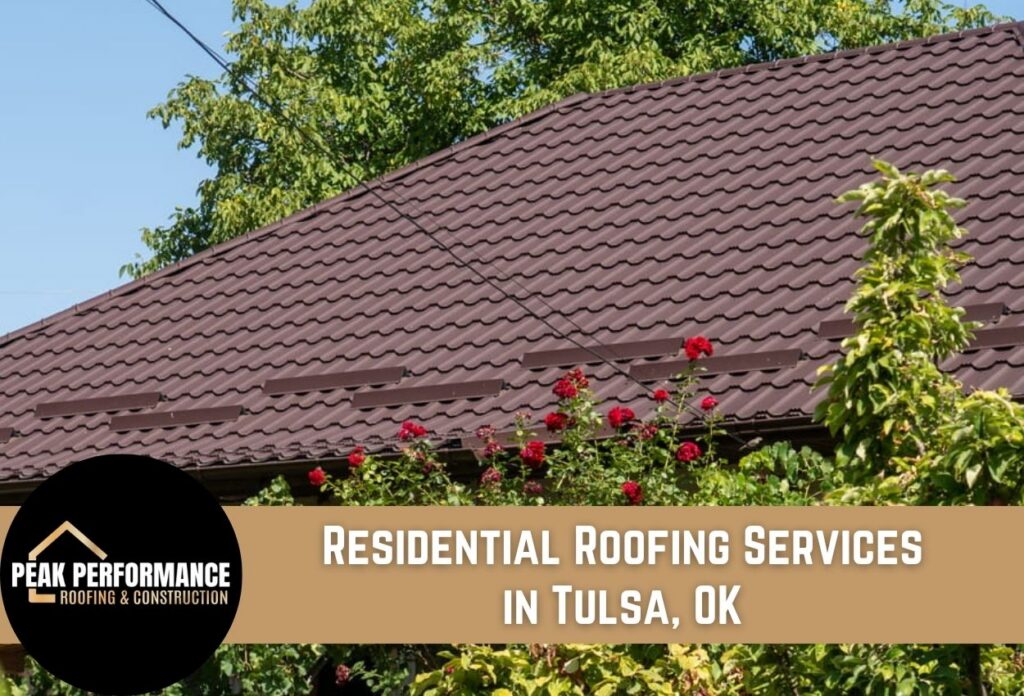

Residential roofing services in Tulsa cover four core categories: repair, replacement, installation, and inspection. In a city where summer temperatures sometimes push past 100 degrees Fahrenheit, winter temperatures drop to the lower 30s, and hail strikes hard enough to punch through asphalt shingles, every one of those services matters more than it would in a milder climate.
Tulsa’s weather puts roofs through a punishing cycle every single year. Heavy spring thunderstorms bring high winds and hail. Summer heat drives expansion and contraction that weakens shingles and sealants, and winter temperature swings stress materials that are already worn. Add in annual rainfall averaging 41 inches and humidity sitting around 66%, and it becomes clear why roofs here take a beating faster than most homeowners expect.
Many Tulsa neighborhoods are filled with mid-century and late-20th-century homes whose original roofing systems are past their best years. Skipping professional services is not a cost-saving move, it’s a risk.
This guide helps Tulsa homeowners identify the right roofing service, find a registered contractor, understand costs, and know exactly when to act.
Why Does Tulsa’s Climate Make Residential Roofing Services More Demanding Than Most U.S. Cities?
Tulsa roofs face five distinct climate stressors simultaneously, and that combination shortens the lifespan of a typical asphalt shingle roof faster than most U.S. cities. Summer temperatures sometimes push past 100 degrees Fahrenheit, annual rainfall averages 41 inches, humidity hovers around 66%, spring thunderstorms deliver hail and high winds regularly, and winter temperature swings attack sealants and flashing year after year. Together, these factors create an environment that requires more frequent roof inspections, faster repairs, and closer attention to the quality of your roofing material.
The table below breaks down each stressor by season, the roofing component it hits hardest, and the type of damage it produces.
| Climate Stressor | Season of Peak Risk | Roofing Component Most Affected | Resulting Damage |
|---|---|---|---|
| Summer heat sometimes exceeding 100 degrees Fahrenheit | Late July through early September | Asphalt shingles | Thermal expansion and contraction, cracking, curling |
| Annual rainfall of 41 inches | Spring and fall | Underlayment, flashing, roof deck | Wood rot, leaks |
| Humidity averaging 66% | Year-round | Ventilation systems, roof deck | Mold growth, granule loss, material deterioration |
| Hail and high-wind thunderstorms | Spring | Shingles, gutters, flashing | Impact fractures, granule stripping, wind uplift |
| Winter temperature changes | December through February | Sealants, flashing, joints | Cracking, separation, water entry at seams |
Most contractors consider asphalt shingles rated for 25 to 30 years in mild climates to perform closer to the lower end of that range in Tulsa because of this layered stress. The year-round combination of heat, moisture, humidity, debris impact, and temperature swings works together to accelerate wear.
Homeowners dealing with hail or wind damage after a storm will find that understanding how those storms interact with existing wear is the key to an accurate damage assessment and a repair plan that actually holds. Tulsa’s location puts it within the broader region sometimes called Tornado Alley, and severe thunderstorms here frequently pair high straight-line winds with hail in the same storm. That combination matters for roofing specifically: Wind can lift shingle edges and break the adhesive seal even where no hail impact occurred, creating an entry point for water that isn’t visible from the ground. Homeowners who experience severe wind without obvious hail damage shouldn’t assume the roof came through unaffected, since wind-related sealant failure often shows up as a leak weeks or months later rather than immediately after the storm.
What Types of Residential Roofing Services Are Available in Tulsa?
Tulsa homeowners have five main residential roofing services available, and choosing the wrong one can mean paying for a repair when a replacement was needed, or overspending on a full tear-off when a targeted fix would have been enough.
| Service Type | What It Includes | Best For | Typical Trigger | Estimated Timeframe |
|---|---|---|---|---|
| Roof Inspection | Visual and physical check of the shingles, flashing, gutters, roof deck, and ventilation | Annual reviews or after storm damage | Maintenance needs, severe weather, or selling a home | 1 to 3 hours |
| Roof Repair | Patching damaged shingles, sealing flashing, fixing leaks, replacing isolated sections | Roofs with localized damage and a sound roof deck | Active leak, storm damage, missing shingles | Half a day to 1 day |
| Partial Roof Replacement | Replacing one or more sections while leaving sound areas intact | Roofs with isolated damage | Hail or wind damage covering part of the roof | 1 to 2 days |
| Full Roof Replacement | Complete tear-off of existing materials, new roof deck inspection, full reinstallation | Roofs 20+ years old or with widespread damage | Multiple leaks, major storm damage, failing shingles | 1 to 3 days |
| New Roof Installation | Full installation on a new construction or additions with no existing roof | New builds or home additions | Construction completion, room additions | 2 to 4 days |
A residential roof inspection is the logical starting point for most Tulsa homeowners, especially after spring storm season. Inspections catch early wear from heat expansion and leaks before those small problems grow into roof deck rot or interior water damage. Detailed inspection checklists go beyond what a single table can cover.
Roof repair is the most common service homeowners search for after a storm or when a ceiling stain appears. Searching for Tulsa home roof repair services usually means something has already gone wrong, such as an active leak, missing shingles after high winds, or visible hail impact. Acting fast on repairs prevents Tulsa’s heavy rainfall from finding an opening and causing more serious damage.
Partial roof replacement suits situations where one slope took damage from a severe storm, but the rest of the roof remains sound. Full replacement becomes the right call when shingles are past 20 years, granule loss is widespread, or multiple leaks have appeared across different sections. Choosing between repair and full replacement comes down to the percentage of the roof affected and the condition of the roof deck underneath, and a registered contractor’s inspection is the only reliable way to get that answer. New installation follows its own process entirely, with material selection and structural requirements that differ from replacement work.
What Roofing Materials Work Best for Homes in Tulsa?
Architectural and impact-resistant asphalt shingles are the most practical choice for most Tulsa homes, but the city’s combined heat, hail, moisture, and wind exposure means the wrong material can fail years ahead of schedule and drive up long-term costs fast. A standard 3-tab shingle rated for 20 to 25 years in a milder climate often falls to the 15-to-20-year range in Tulsa’s severe weather. Getting the material selection right from the start has the most effect on how long a roof lasts and what it costs over time.
| Material Type | Typical Lifespan in Tulsa | Hail Resistance Rating | Heat Performance | Relative Cost | Best Application |
|---|---|---|---|---|---|
| 3-Tab asphalt shingles | 15 to 20 years | Not formally impact-rated | Poor; absorbs heat, accelerates cracking | Lowest | Budget replacements; low-risk homes |
| Architectural asphalt shingles | 20 to 30 years | Class 2 to Class 3 | Moderate; thicker profile handles expansion better than 3-tab | Low to moderate | Most Tulsa single-family homes; best balance between cost and performance |
| Impact-resistant shingles | 25 to 35 years | Class 4 impact resistance | Moderate to good; reinforced core reduces heat damage | Moderate | Homes in areas with frequent hailstorms |
| Metal | 40 to 70 years | Class 4 impact resistance | Excellent; reflects radiant heat, reduces attic temperatures | High | Long-term ownership; energy-efficient goals; storm-prone exposures |
| Wood Shakes | 20 to 30 years | Not formally impact-rated; splits under hail rather than dents | Good natural insulation, but traps moisture rather than shedding it | High | Rustic/historical curb appeal on homes willing to commit to frequent maintenance |
Architectural and impact-resistant asphalt shingles dominate residential roofing in Tulsa for one straightforward reason: They offer the best balance of cost, durability, and performance against the specific stressors local roofs face. Architectural asphalt shingles cost more than 3-tab upfront but last noticeably longer under Tulsa’s heat and moisture conditions. Impact-resistant shingles take that further, and some homeowners insurance carriers offer premium reductions for homes with Class 4 rated materials, which can offset part of the higher installation cost over time.
Metal roofs make a strong long-term return-on-investment case for homeowners who plan to stay in a home for decades, given their 40 to 70-year lifespan, top-tier hail resistance, and heat-reflective properties that can reduce cooling costs during Tulsa’s hottest months. The higher upfront cost spreads out over a much longer lifespan than any asphalt option.
Shingle color plays a role too: lighter-colored shingles reflect more solar radiation than dark shingles, which can shave a few degrees off attic temperatures during Tulsa’s hottest months and modestly extend material life. The performance gap is small compared to switching material types entirely, but it’s a no-cost consideration worth raising with a contractor when color options are otherwise a toss-up. Peak Performance Roofing & Construction can help assess which material fits a specific home’s roof pitch and budget before homeowners make any decision.
How Much Do Residential Roofing Services Cost in Tulsa?
Residential roofing costs vary widely based on the type of service, the size of the roof, its pitch, material choice, and the condition of the roof deck underneath. Expecting a single fixed number will lead to sticker shock or missed red flags. A range is the more accurate starting point for any budget conversation.
| Service Type | Low-End Estimate | High-End Estimate | Primary Cost Drivers |
|---|---|---|---|
| Minor Repair | $150 | $600 | Number of shingles, flashing condition, accessibility |
| Major Repair | $600 | $2,500 | Roof deck damage, extent of leaks, materials needed |
| Partial Roof Replacement | $2,000 | $5,500 | Section size, pitch, material match to existing roof |
| Full Replacement (architectural asphalt shingles) | $9,500 | $17,500 | Roof square footage, tear-off layers, roof deck repairs |
| Full Replacement (impact-resistant or premium shingles) | $13,000 | $20,000 | Class 4 material costs, underlayment upgrades, roof complexity |
| New Construction Installation | $8,000 | $18,000 | Square footage, material grade, pitch, and labor |
A full roof replacement using standard architectural asphalt shingles on a 2,000 sq. ft. home in Tulsa currently trends in the $9,500 to $17,500 range, with industry averages landing near $12,000. However, that figure can shift depending on how many layers need to be torn off, whether the roof deck requires repairs, and the steepness of the roof pitch.
Hail and wind damage claims are common in Tulsa, and a successful insurance claim can offset a large portion of out-of-pocket replacement or repair costs. Homeowners who skip the claims process after a storm often pay full replacement costs that insurance would have partially or fully covered.
The claims process itself typically follows a predictable sequence. After a storm, the homeowner contacts their insurance carrier to open a claim and receives a claim number along with a timeline for an adjuster visit. The adjuster inspects the roof, documents visible damage, and issues an estimate based on the insurer’s own pricing software, which sometimes underestimates local labor and material costs compared to what Tulsa contractors actually charge. This is where having a contractor present for the adjuster walkthrough helps, since a contractor can point out damage the adjuster might miss and push back on a range that’s too narrow. Once the insurer approves the claim, they issue the payment either as a lump sum or in two installments, with the second released after the contractor completes the work and provides a final invoice.
Documenting damage quickly and working with a contractor experienced in insurance-assisted repairs makes a real difference in what comes out of pocket. Peak Performance Roofing & Construction works with homeowners through that process and can help assess storm damage before they file a claim.
How Do You Find and Evaluate Affordable Residential Roofing Contractors in Tulsa?
Affordable residential roofing contractors in Tulsa are not hard to find after a major hailstorm, but finding one worth hiring takes a deliberate checklist, because storm chasers from out of state flood the Tulsa market within days of significant weather and often disappear before warranty issues surface.
- Verify Oklahoma state contractor registration. Oklahoma requires roofing contractors to hold a valid Residential Roofing Endorsement. Ask for their registration number and confirm it through the Oklahoma Construction Industries Board before any work begins.
- Confirm a Tulsa area business address. A contractor with a verifiable physical address in or near Tulsa is much less likely to vanish after collecting a deposit. A P.O. box or out-of-state address is a red flag worth taking seriously.
- Require proof of liability insurance and workers’ compensation coverage. Request certificates directly from the contractor’s insurer and confirm that both policies are active. Without workers’ compensation coverage, an injury on your property can become your financial problem.
- Ask about manufacturer certifications. Certified installers from major shingle manufacturers can offer extended warranties, sometimes 25 to 50 years, that uncertified contractors cannot. Certification also signals that the contractor has completed product-specific training.
- Check verifiable local references and online reviews. Ask for at least three Tulsa-area references from jobs completed within the past 12 months. Cross-check those against Google and Better Business Bureau reviews; a pattern of recent complaints carries more weight than older praise.
- Require a written, line-item estimate. A detailed estimate should break out material costs, labor, tear-off, underlayment, flashing, and any roof deck repairs separately. Lump-sum quotes make it impossible to compare contractors or spot inflated line items.
- Get a clear contract with a timeline and payment terms. A reputable contractor will specify a project start date, a completion window, and a payment schedule tied to project milestones, not a full payment upfront. Demanding full payment before work starts is a common storm-chaser tactic.
- Watch for storm-chaser warning signs. Door-to-door solicitation within 48 hours of a severe storm, pressure to sign the same day, no local address, and offers to waive your insurance deductible are the most common red flags reported by Tulsa homeowners after major storms.
The best roof replacement companies in Tulsa will offer documentation on all eight criteria above, which is a reliable sign of quality when making a hiring decision. Peak Performance Roofing & Construction provides that documentation as a standard part of the estimate process.
What Permits and Code Requirements Apply to Residential Roofing in Tulsa?
The City of Tulsa requires a residential building permit for full roof replacements and structural roofing repairs before work begins.
For most homeowners, the practical side of permits is straightforward: Pulling the permit is the contractor’s job, not the homeowner’s. A reputable roofing contractor will handle the permit application and fold the associated costs into the project estimate. Hiring a contractor who skips the permit process puts the homeowner at risk for liability, failed inspections, and potential complications with homeowners’ insurance claims or a future home sale. Unpermitted work can surface during a title search and prevent a sale or force expensive corrections years after the contractor finishes the original job.
Specific permit fees and applicable code sections can vary by project and change over time, so homeowners should confirm current requirements directly with the City of Tulsa’s Development Services department before work begins. A reputable local contractor will already be familiar with those requirements and handle them as needed.
What Is the Residential Roof Replacement Process From Start to Finish?
A standard residential roof replacement in Tulsa follows eight defined steps, with installation itself typically taking 1 to 3 days once materials arrive and the city approves the permits. Knowing the sequence ahead of time helps homeowners plan around the project and spot any contractor cutting corners along the way.
- Initial inspection and damage assessment. A contractor examines the roof, flashing, and gutters to document existing conditions. This step usually takes 2 to 4 hours and determines whether repair or full replacement is the right call.
- Detailed written estimate and material selection. The contractor delivers a line-item written estimate covering materials, labor, tear-off, underlayment, and flashing. Homeowners choose their shingle type here, which directly affects the final cost depending on material grade.
- Permit application. The contractor pulls the required City of Tulsa building permit, which is necessary for full replacements as well as any structural repair work. Homeowners should confirm with their contractor that the schedule includes this step and never assume it’s handled automatically.
- Tear-off of existing roof. The crew removes old shingles and any damaged underlayment down to the roof deck. Tear-off of a single layer on a standard Tulsa home usually takes 4 to 6 hours; multiple layers take longer and add to the final cost.
- Roof deck inspection and underlayment installation. The contractor inspects the exposed roof deck for rot, soft spots, or water damage before any new material goes down. This is the step where hidden problems surface and where homeowners may face additional repair costs. The crew installs new underlayment across the full roof deck.
- Shingle and flashing installation. The crew lays shingles from the eave up and installs step flashing, counter flashing, and drip edges at valleys, walls, and edges. This is the largest portion of the installation window.
- Cleanup and debris removal. Crews remove all torn-off material, nails, and packaging from the yard. A magnetic roller pass is standard practice for catching loose fasteners in grass and driveways.
- Final inspection and warranty documentation. The contractor checks the finished roof, confirms that the city has scheduled the permit inspection, and delivers workmanship warranty paperwork along with any manufacturer warranty documentation tied to the installed shingle brand.
Most Tulsa homeowners find the process straightforward when a reputable, local contractor manages each step in order.
When Is the Best Time of Year to Schedule Residential Roofing Services in Tulsa?
Fall is the best time to schedule a non-emergency roof replacement in Tulsa, as temperatures are moderate, contractor demand drops after the spring storm rush, and shingle adhesives seal reliably without the extremes of summer heat or winter cold. Each season carries real tradeoffs that affect both installation quality and how quickly a crew can get to your job.
| Season | Scheduling Conditions | Homeowner Considerations |
|---|---|---|
| Spring | Peak storm damage season; contractor backlogs common after hailstorms; high demand limits availability | Expect 2 to 4+ week waits after major storms; get on contractor lists quickly after damage occurs |
| Summer | Extreme heat; highs can push above 100 degrees Fahrenheit from late July through early September; limits safe working windows to early morning hours | Heat can cause shingles to shift during installation; schedule early-morning start times when possible |
| Fall | Most favorable conditions; moderate temperatures support proper adhesive sealing; contractor availability improves | Best window for non-emergency replacements |
| Winter | Temperature swings affect adhesive performance; work is possible, but weather delays are common | Cold-weather installation requires extra care with sealing; ask the contractor about cold-weather material handling |
When a storm comes through and causes damage, such as missing shingles, an exposed roof deck, or leaks, waiting for a favorable season is not an option. Ask your contractor about emergency roof tarp installation to protect your home while they schedule permanent repairs, since even a short delay without temporary protection can turn minor storm damage into a much more expensive interior repair. For all non-emergency work, scheduling an inspection in the fall offers better contractor availability and a completed roof before winter temperature changes put stress on new materials.
How Long Should a Residential Roof Last in Tulsa’s Climate, and What Affects Durability?
Most Tulsa roofs fall toward the lower end of manufacturer lifespan estimates. Standard 3-tab asphalt shingles typically last 15 to 20 years here, architectural asphalt shingles 20 to 30 years, impact-resistant shingles 25 to 35 years, and metal 40 to 70 years. Those ranges assume a reasonable maintenance schedule. In Tulsa’s climate, the combination of intense UV exposure, wide temperature swings, and frequent hailstorms pushes most roofs toward the shorter end of those windows.
Several variables determine how long a roof lasts. The quality of the original installation matters more than most homeowners expect, as a poorly installed architectural shingle roof may not outlast a well-installed 3-tab shingle roof. Attic ventilation plays a direct role too. Without adequate airflow, heat builds up under the roof deck and accelerates shingle breakdown from the inside out. Another major factor is how quickly homeowners schedule minor repairs. A small flashing gap or a handful of cracked shingles left unaddressed for one season can allow leaks that shorten a roof’s lifespan by years.
Why Tulsa’s Climate Works Against Standard Lifespan Estimates
UV intensity in Oklahoma is harsh, and asphalt shingles lose granules and flexibility faster under sustained sun exposure. Year-round temperature swings from freezing winters to summers pushing past 100 degrees Fahrenheit continuously stress roofing materials. Hail frequency adds stress on top of it all. A single significant hailstorm can reduce a roof’s remaining lifespan by 5 years or more, even when visible damage appears minor.
Choosing impact-resistant shingles at installation and scheduling annual inspections are the two most effective ways to extend a Tulsa roof’s lifespan toward the top of its range. That kind of routine plan is what actually separates a 20-year roof from one that needs replacement much earlier.
Does a New Roof Add Value to a Tulsa Home, and Is It Worth the Investment?
A new roof consistently ranks among the highest-returning home improvement projects. The 2025 National Cost vs. Value Report shows homeowners recover roughly 68% of asphalt shingle roof replacement costs at resale. That financial return is only part of the story. The other part is what deferred replacement actually costs over time.
| Factor | Homeowner Who Delays | Homeowner Who Replaces |
|---|---|---|
| Out-of-pocket repair costs | Ongoing patch costs accumulate; often $500 to $2,000+ per repair cycle | One-time replacement cost between $7,000 and $20,000; no recurring patch costs |
| Interior damage risk | High; active leaks can cause mold, roof deck rot, and ceiling damage costing $3,000 to $10,000+ | Low; new materials and proper flashing stop water leaks at the source |
| Insurance premium impact | An aging roof may increase premiums or result in coverage denial at renewal | Impact-resistant shingles can qualify for premium discounts with many carriers |
| Resale position | Buyers offer lower bids or request repair credits for aging roofs | A new roof is a documented selling point; recoup 68% of replacement cost at resale |
A workmanship warranty from a certified contractor protects the investment long after homeowners recover the initial cost. Tulsa homeowners comparing the best roof replacement companies in Tulsa should treat warranty terms as a financial variable, not just a checkbox. Peak Performance Roofing & Construction offers documented warranty coverage that belongs in any honest cost comparison.
Beyond the resale percentage, a new roof changes how a home appears during the sale process itself. Buyers and their inspectors treat the age of a roof as a first-pass filter, and a roof nearing the end of its expected lifespan often triggers a request for a price reduction, a repair credit, or a pre-closing replacement as a condition of the sale, regardless of whether the roof is currently leaking. A documented recent replacement removes that negotiating leverage entirely and can shorten how long a home sits on the market, since fewer buyers walk away or renegotiate over a roof-related contingency. For homeowners weighing a replacement against a near-term sale, that reduction in negotiating friction is often worth as much as the resale percentage itself.
What Are the Most Common Residential Roofing Problems Tulsa Homeowners Face?
Tulsa homeowners most often deal with nine recurring roofing problems, and knowing which ones signal a targeted repair versus a full replacement can save thousands of dollars in unnecessary work or delayed action.
- Hail-damaged shingles: Look for circular dents, bruised soft spots, and accelerated granule loss after any storm with hailstones larger than 1 inch. Even when damage looks minor, a single significant hailstorm can reduce a roof’s remaining lifespan by 5 years or more, making a professional inspection non-negotiable after major storms.
- Wind-lifted or missing shingles: Shingles that curl, crack, or disappear after severe winds expose the underlayment to direct water entry within hours. Tulsa’s severe weather produces this problem repeatedly. One to three missing shingles often qualify as a targeted repair, while larger sections warrant broader assessment.
- Active interior leaks from failed flashing or underlayment: Water stains on ceilings or walls within 24 to 48 hours of rainfall point directly to failed step flashing, valley flashing, or a compromised underlayment. Left unaddressed for even one season, active leaks can cause mold, roof deck rot, and ceiling damage costing $3,000 to $10,000 or more. Homeowners should schedule urgent repair for any active interior leak.
- Granule shedding in gutters: Finding heavy granule deposits in downspouts after rain is a measurable sign that shingles are aging past their useful lifespan. Standard 3-tab asphalt shingles typically last 15 to 20 years in Tulsa’s climate, and heavy granule loss before that window closes often points to accelerated wear from UV or hail exposure.
- Sagging or soft roof deck: Soft spots or visible sagging between rafters indicate that moisture has reached the roof deck. This goes beyond shingle replacement, as the roof deck itself may need repair or a full replacement before the crew can install new shingles.
- Moss or algae growth: Tulsa’s average humidity around 66% creates ideal conditions for moss and algae to grow, especially on north-facing slopes with limited sun. Black streaking or green patches signal moisture retention that damages shingle strength over time. Targeted treatment can typically resolve this issue, but repeated growth may indicate poor ventilation or drainage problems.
- Improper ventilation causing premature material failure: Without adequate attic airflow, heat builds up under the roof deck and breaks down shingles from the inside out, sometimes cutting years off a roof’s functional lifespan before visible damage appears on the surface. If your energy bills rise and your roof’s shingles are aging faster than expected, ventilation is worth evaluating.
- Failed pipe boot or chimney flashing: Rubber pipe boots crack and shrink within 10 to 15 years under Tulsa’s temperature extremes. Chimney flashing failures are among the most common sources of interior leaks on roofs that otherwise appear intact. Both are targeted repairs when caught early.
- Ice dam-related damage during hard winters: When Tulsa’s winter temperatures swing, ice can form at the roof’s edge and force melted water under shingles. Staining along interior walls at the roofline after a freeze is a warning sign.
Use this list as a starting point for assessment before calling a residential roof repair contractor in Tulsa. Problems involving active leaks, a soft roof deck, or post-hail damage should move to the top of the call list, as those are the issues most likely to turn a manageable repair into a much higher expense.
How Do Tulsa Homeowners Maximize Savings on Residential Roofing Services?
Getting affordable residential roofing in Tulsa means making smarter decisions at every step, not just accepting the lowest number on a written estimate.
- Schedule services outside of peak windows: Late summer and fall typically bring slower contractor schedules, which can mean better availability and more negotiating room on labor costs. Booking outside of spring’s storm-rush season often gets contractors to the job faster too.
- Collect three or more written estimates: Getting at least three competitive quotes gives a clear picture of the local market rate and makes it easier to spot outliers, both unusually low bids and inflated ones.
- File insurance claims quickly after storms: Tulsa’s hail season moves fast. Filing within days of a qualifying storm, especially one with hailstones larger than 1 inch, keeps the claim timeline clean and the documentation accurate.
- Choose impact-resistant shingles: Class 4 impact-resistant shingles can qualify for homeowners insurance premium discounts with many carriers, helping offset a higher upfront cost over time.
- Bundle inspection with repair work: Combining a roof inspection and any repair work into a single contractor visit reduces mobilization costs. Paying for two separate trips for work that could happen in one adds up.
- Ask about manufacturer rebate programs: Some manufacturers run rebate programs at various times of year. A reputable contractor should know what is currently available and apply it to the project estimate.
- Verify manufacturer-certified installation: A contractor who cuts corners on underlayment, flashing, or ventilation creates costs that typically surface within 2 to 5 years, turning a lower quote into a more expensive outcome than a quality quote at a moderate premium.
- Ask about financing options: Many reputable roofing companies offer financing options that make a full replacement or new installation accessible without requiring full upfront payment. Ask specifically about financing when collecting estimates.
The financially sound choice is the quote that delivers a quality installation, full warranty coverage, and no hidden costs surfacing 2 years later. When comparing estimates, ask Peak Performance Roofing & Construction about current financing options and manufacturer programs that apply to your project.
Ready to Get Started? Contact Tulsa’s Trusted Residential Roofing Professionals Today
Now that you have a full picture of Tulsa residential roofing, from repair costs and contractor standards to storm timing and what deferred damage can cost, the smartest next step is getting eyes on your roof before Tulsa’s spring storm season creates a backlog.
Peak Performance Roofing & Construction serves the Tulsa area with reputable, insured residential roofing services and documented warranty coverage. Active leaks and post-hail damage can escalate into expensive interior repairs. Catching problems early is always the lower-cost path.
Not ready to schedule? Learn more about residential roofing services.