 (918) 694-1483
 What Is Wood Shake Roofing and Is It a Good Fit for Broken Arrow, OK?
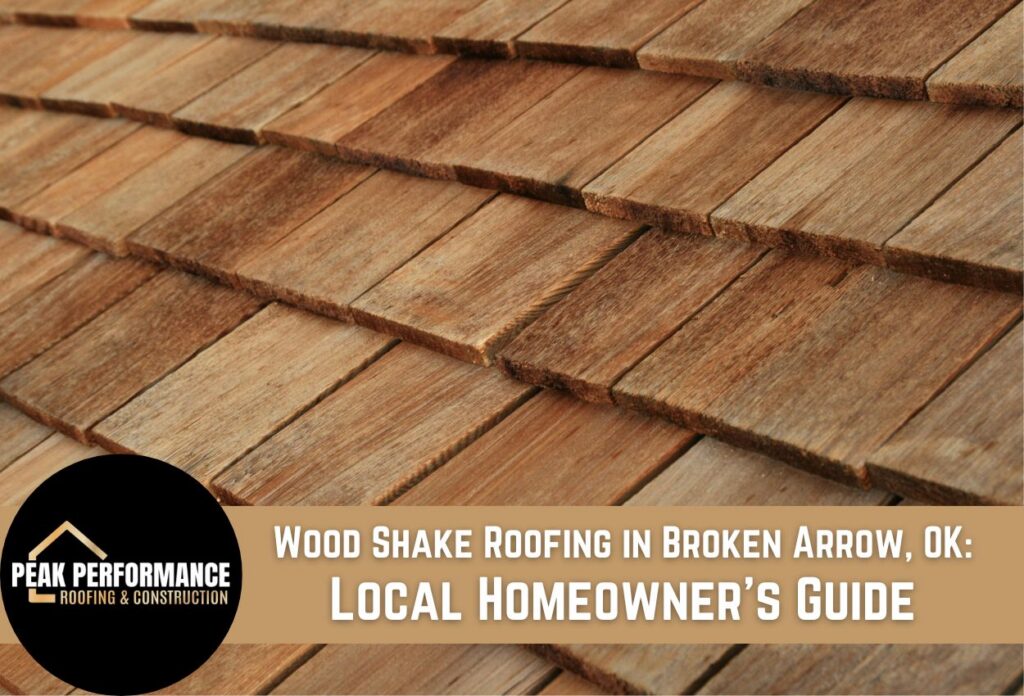

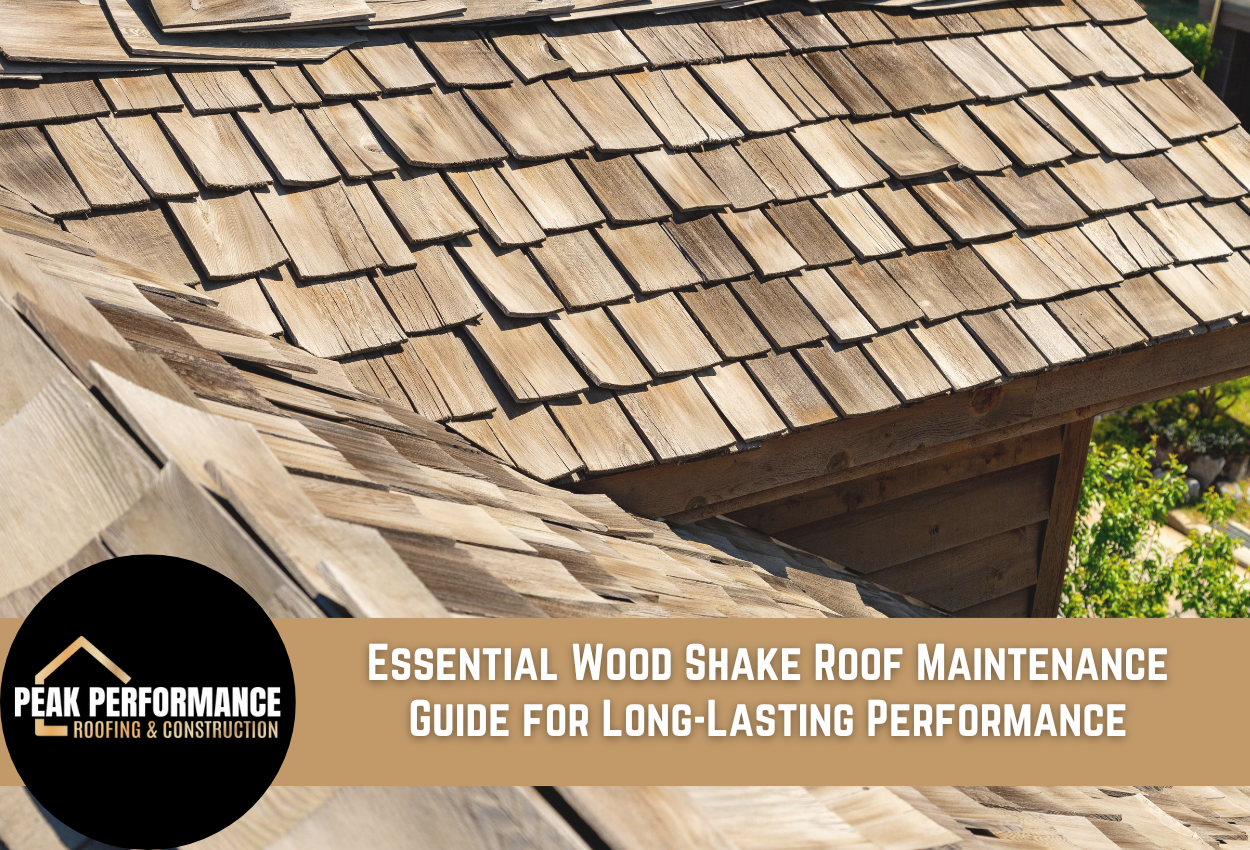
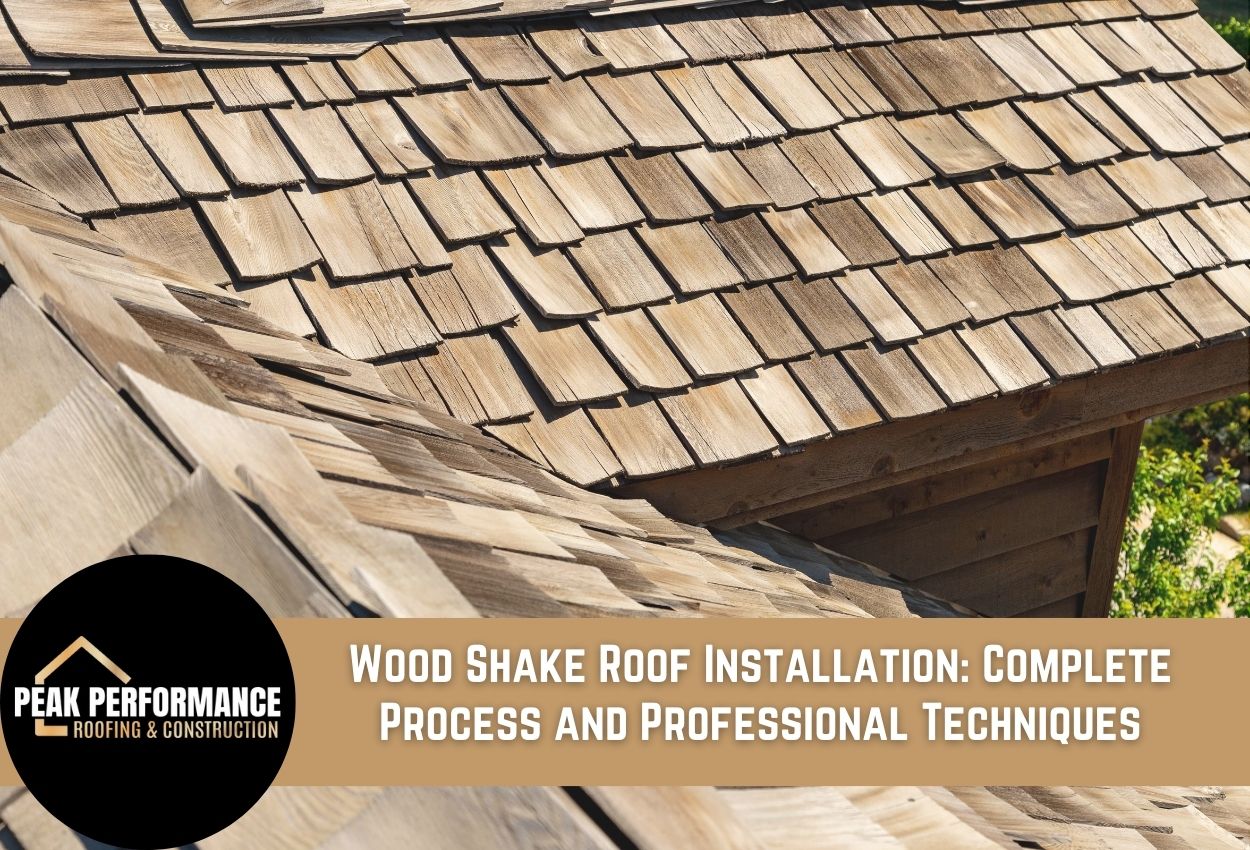
Wood shake roofing is a premium natural roofing material that can work well in Broken Arrow, but the local climate demands careful planning before you commit. Cedar shake roofs and pine shake roofs are made from split or sawn pieces of wood — typically cedar or pine — cut into thick, textured panels. Wood shakes differ from wood shingles in one key way: shakes are thicker, with a rougher split surface, while shingles are thinner and sawn smooth on both sides. That extra thickness gives shakes a more rugged appearance but also means they hold moisture longer.
Broken Arrow’s climate is hard on roofing materials. Annual rainfall averages 45 inches, thunderstorms roll through roughly 55 days per year, and temperatures swing from lows of 11.4°F in January to highs of 103.4°F in August. That kind of range stresses any roof. For wood shake roofs, high humidity and heavy rain create conditions where moisture retention and decay can shorten a roof’s life if the system is not properly installed and maintained.
This guide covers everything a Broken Arrow homeowner needs to know — installation basics, costs, contractor selection, climate suitability, maintenance requirements, and how wood shake compares to alternative roofing materials.
How Does Broken Arrow’s Climate Affect Wood Shake Roofing Performance?
Broken Arrow’s 74% average annual humidity is the single biggest threat to wood shake longevity in this area. That humidity — peaking at 80% in December — keeps wood fibers damp long enough to accelerate fungal growth, moss, and structural decay. Add 45 inches of annual rainfall, roughly 55 thunderstorm days per year, and temperature swings from 11.4°F in January to 103.4°F in August, and wood shake roofing faces serious year-round stress in northeastern Oklahoma.
Moisture retention is the primary threat. The Arkansas River Valley’s low-lying geography traps humid air and slows drying between rain events, giving untreated wood shakes less recovery time. Fungal spores take hold quickly in persistently damp conditions, breaking down the wood fibers from the inside out. Moss and algae follow, adding weight and holding even more moisture against the surface.
Thunderstorms compound the problem in a different way. Late-spring and early-summer storms can produce large hail and wind gusts that stress even well-installed roofs. Wood shake’s thicker profile does offer more impact resistance than standard asphalt shingles, but repeated hail strikes can split or crack individual shakes. High-wind uplift from severe storms can lift shakes that have already been weakened by moisture damage. Homeowners dealing with storm-related damage should review hail damage roof repair services before the next storm season arrives.
| Climate Variable | Broken Arrow Actual | Wood Shake Performance Threshold | Risk Level |
|---|---|---|---|
| Average annual humidity | 74% (peaks at 80% in December) | Below 60% preferred for slow decay | High |
| Annual rainfall | 45 inches | Under 30 inches ideal for untreated wood | High |
| Annual thunderstorm days | ~55 days | Most shake systems rated for winds up to 90 mph | Moderate to High |
| Annual snowfall | ~6 inches | Low snow load; not a primary stress factor | Low |
| Temperature range | 11.4°F to 103.4°F | Repeated extremes cause expansion and contraction | Moderate |
| Safe installation temp range | August highs reach 103.4°F; January lows at 11.4°F | Most contractors recommend 40°F to 90°F | Seasonal planning required |
The table makes clear that humidity and rainfall create the most consistent problems for wood shake in this market. Proper underlayment, preservative treatments, and ventilation are not optional extras here — they are the difference between a wood shake roof that lasts 25+ years and one that deteriorates in under 15.
What Types of Wood Shake Roofing Are Available to Broken Arrow Homeowners?
Broken Arrow homeowners have four primary wood shake types to choose from, and selecting the right one — paired with the correct grade and treatment — makes a measurable difference in how long the roof holds up against local humidity and storm conditions.
- Hand-split and resawn cedar shakes: These are the most common cedar shake roofs installed in northeastern Oklahoma. One face is rough from splitting, the other sawn smooth. Thickness typically ranges from 3/4 inch to 1-1/4 inches at the butt end, giving them a bold, textured appearance and decent impact resistance during hail events.
- Taper-sawn cedar shakes: Both faces are sawn, producing a more uniform look with cleaner lines. Thickness still tapers from butt to tip, but the smoother surface sheds water faster — a practical advantage in a market that sees 45 inches of annual rainfall.
- Straight-split shakes: Split on both faces with no tapering, these shakes have a consistent thickness throughout. They carry a rustic appearance but can trap more moisture along their flat profile, which raises decay risk in Broken Arrow’s high-humidity environment.
- Pine shakes: Less common than cedar but available in this market. Pine is more affordable but less naturally rot-resistant, making factory-applied preservative treatments non-negotiable when annual humidity averages 74%.
Cedar Shake Grades and Why They Matter Here
- Grade 1 Blue Label: The highest grade — all heartwood, all edge grain, no defects. This grade is strongly recommended for Broken Arrow homes because heartwood resists decay and moisture absorption far better than lower-grade material, and that matters in a climate where humidity peaks at 80% in December.
- Grade 2 Red Label: Allows some flat grain and limited sapwood. Lower upfront cost, but sapwood decays faster under persistent moisture exposure. In a storm-prone, high-humidity market, Grade 2 shakes may need replacement years sooner than Grade 1.
Treated vs. Untreated Options
- Factory-applied fire-retardant treatments: Oklahoma fire codes in urban and suburban areas — including much of Broken Arrow — may require treated shake products on new installations. Fire-retardant treatments are applied at the factory and carry a specific pressure-treatment rating; field-applied coatings do not meet the same code standard.
- Preservative coatings: Separate from fire treatment, preservative coatings slow moisture absorption and fungal growth. Given Broken Arrow’s rainfall and humidity levels, untreated shakes without a preservative coating carry a high decay risk and are generally not recommended by roofing professionals in this market.
Grade selection and treatment type together determine how long a wood shake roof actually lasts in Broken Arrow’s climate — two roofs that look identical at installation can perform very differently after ten years based on those two choices alone. Synthetic or composite shake products — engineered to replicate real wood — also exist as an alternative option and are covered in a later section of this guide.
“`html
What Does Wood Shake Roof Installation Cost in Broken Arrow, Oklahoma?
Wood shake roof installation in Broken Arrow typically runs between $600 and $1,400 per square (100 square feet) for materials alone, with total installed costs — including labor, underlayment, permits, and tear-off — generally ranging from $12,000 to $28,000 for a standard residential roof in the Tulsa metro market.
| Cost Category | Low Estimate | Mid Estimate | High Estimate |
|---|---|---|---|
| Materials (per square) | $600 | $900 | $1,400 |
| Labor (per square) | $250 | $375 | $550 |
| Underlayment and weather barrier | $500 | $900 | $1,500 |
| Permit fees (Broken Arrow / Tulsa) | $150 | $300 | $500 |
| Tear-off and disposal | $500 | $900 | $1,800 |
| Total installed estimate (average home) | $12,000 | $18,500 | $28,000 |
Several variables push costs toward the high end in this specific market. Roof pitch and complexity matter most — steeply pitched or multi-faceted roofs require more labor hours and slower, more precise installation. Grade 1 Blue Label cedar shakes cost noticeably more than Grade 2 Red Label material, but in a climate with 74% average annual humidity, paying for the better grade upfront reduces decay-related replacement costs later. Factory-applied fire-retardant treatments add cost to the materials line but may be required under Broken Arrow and Tulsa building codes, particularly in suburban areas close to residential development. Ventilation upgrades — often necessary to extend shake life in Oklahoma’s humid conditions — add to the total as well. Contractor experience level also affects the labor rate; licensed roofing contractors in Oklahoma with documented shake installation experience tend to charge more than general roofers, and that experience gap shows up in how the system performs after the first storm season.
Wood shake installation runs roughly 40% to 80% higher in total installed cost than comparable asphalt shingle installation in the Broken Arrow market — a gap driven by material costs, specialized labor, and the additional moisture management components wood shake systems require here. That cost comparison is covered in full in a dedicated section of this guide, which is a common point of consideration for homeowners searching wood shake roof installation Broken Arrow OK.
“` “`html
Wood Shake vs. Asphalt Shingles in Broken Arrow, OK: Which Is Right for Your Home?
Wood shake roofing costs 40% to 80% more than asphalt shingles at installation, but the right choice depends on your home’s style, your maintenance commitment, and how long you plan to stay — not just upfront costs.
| Comparison Dimension | Wood Shake | Asphalt Shingles | Broken Arrow Context |
|---|---|---|---|
| Upfront cost (installed) | $12,000 to $28,000 | $6,500 to $16,000 | Wood shake runs 40% to 80% higher in this market |
| Lifespan (local climate) | 20 to 30 years with proper maintenance | 20 to 30 years | Humidity and 45 inches of annual rainfall compress shake lifespan without treatment |
| Maintenance requirements | Every 3 to 5 years (cleaning, treatment, inspection) | Every 5 to 7 years (inspection, minor repairs) | 74% average humidity accelerates wood decay without regular preservative reapplication |
| Fire resistance | Class C untreated; Class A or B with factory treatment | Class A standard | Oklahoma code may require treated shake in suburban Broken Arrow neighborhoods |
| Wind and hail resistance | Moderate; rated to ~90 mph in most systems | Class 4 impact-resistant options available; up to 130 mph rated | ~55 thunderstorm days per year makes high wind rating a practical concern |
| Curb appeal | High on traditional, ranch, and mid-century modern homes | Moderate; wide variety of styles available | Many Broken Arrow homes built 1950 to 1980 were designed with wood-based roofing profiles in mind |
| Energy efficiency | Natural insulating properties; moderate R-value benefit | Cool roof and ENERGY STAR options widely available | August highs reaching 103.4°F favor reflective asphalt options for cooling costs |
| Environmental impact | Biodegradable; sustainably sourced cedar available | Petroleum-based; landfill contribution at end of life | Both options available locally; cedar sourcing varies by supplier |
| Insurance implications | Higher premiums common; some carriers restrict coverage | Standard coverage; Class 4 shingles may earn discounts | Homeowners insurance carriers in Oklahoma increasingly scrutinize wood shake fire and storm risk |
The curb appeal argument for wood shake is real — and it carries particular weight in the Broken Arrow metro, where a large share of homes were built between 1950 and 1980 in traditional, ranch, and mid-century modern styles. Those architectural profiles were shaped around wood roofing textures, and replacing a worn shake roof with a matching system restores that character in a way asphalt shingles often cannot match. For homeowners with the right home style, a maintenance plan, and a budget that covers the full installed cost of $12,000 to $28,000, wood shake can deliver both character and long-term value — but it is not the practical winner for every Broken Arrow home. Asphalt shingles offer lower costs, stronger fire ratings out of the box, and less maintenance burden in a climate that already tests roofing systems with 45 inches of rain and ~55 storm days per year. The decision comes down to what the home demands visually, what the homeowner can sustain over time, and how those factors weigh against each other.
“`
How Long Does a Wood Shake Roof Last in Northeastern Oklahoma?
Wood shake roofs in the Broken Arrow and Tulsa market typically last 20 to 30 years with proper installation and maintenance — compared to 30 to 50 years achievable in drier climates. That compressed range comes directly from northeastern Oklahoma’s combination of 74% average annual humidity, roughly 45 inches of rain per year, and temperature swings that stress wood fiber repeatedly across every season.
What Happens to a Wood Shake Roof Over Time
The degradation timeline gives homeowners a clear roadmap. Around the 5-year mark, expect surface weathering and minor cracking as UV exposure and seasonal temperature changes begin to dry and contract individual shakes. This stage is manageable and largely cosmetic if addressed early. Between 10 and 15 years, moss and algae colonization becomes a real risk in this climate. Without treatment, moisture retention accelerates shake splitting and early structural thinning. At 20 years and beyond, the stakes rise sharply — shakes that have not been maintained regularly can allow moisture to reach the roof deck itself, leading to deck damage that turns a re-roofing job into a more expensive repair project.
Maintenance That Extends Roof Life
Annual inspections, biennial cleaning, resealing every few years, and fast repair of damaged shakes are the actions that push a wood shake roof toward the upper end of that 20 to 30 year range rather than the lower end. Skipping even one or two maintenance cycles in a climate with Broken Arrow’s rainfall and humidity can accelerate decay faster than most homeowners expect. A documented maintenance history is not just good practice — insurance carriers in Oklahoma may require it, and some carriers restrict or decline coverage for untreated wood shake roofs, making consistent upkeep a direct financial consideration, not just a roofing one. Homeowners who plan to file a storm claim after one of the area’s roughly 55 annual thunderstorm days will want that maintenance record on hand before the adjuster arrives.
“`html
What Are the Maintenance Requirements for Wood Shake Roofing in Broken Arrow?
Wood shake roofs in Broken Arrow require at minimum one professional inspection per year, plus seasonal tasks timed around the area’s storm and humidity cycles — skipping even a single maintenance cycle in a climate with 74% average annual humidity can accelerate decay faster than most homeowners expect.
- Spring inspection after storm season: Walk the perimeter and check for displaced, cracked, or split shakes within 48 hours of any hail event. Spring is also the time to clear debris that accumulated during winter and check flashing for separation caused by temperature changes over the cold months.
- Summer cleaning and resealing: Apply preservative or sealant only when shakes have fully dried — resealing over wet wood in humid conditions traps moisture inside the fiber and accelerates rot. In Broken Arrow’s climate, shakes should dry for at least 48 hours of low-humidity conditions before any treatment goes on.
- Moss and algae treatment: With 74% average annual humidity, biological growth is one of the most common problems on wood shake roofs here. Moss and algae hold moisture against the wood surface, which accelerates splitting and structural thinning — treat affected areas with a wood-safe biocide and address drainage issues that create shaded, damp zones on the roof.
- Fall debris removal before humidity peaks: Humidity peaks at 80% in December. Clear leaves, pine needles, and organic buildup from roof surfaces and valleys before that window arrives. Trapped debris holds moisture against wood and feeds biological growth through winter.
- Gutter clearing to prevent moisture backup: Clean gutters at least twice per year — once in late fall and once in early spring. Blocked gutters cause water to back up at the eave line, which saturates the lowest shakes and the roof deck underneath.
- Ventilation checks: Poor attic ventilation allows condensation to build up under the roof deck, softening the structure from below. Check soffit and ridge vents annually to confirm airflow is unobstructed.
- Spot shake replacement: Replace individual cracked, split, or missing shakes as soon as they are found. Spot repairs are sufficient when damage is isolated to fewer than 10% to 15% of the roof surface. When deterioration becomes widespread — multiple areas showing decay, thinning, or moss penetration — that pattern signals a full residential roof replacement consultation, not another round of patching.
Two DIY mistakes are especially damaging in this climate: pressure washing, which strips wood fiber and opens the surface to faster moisture absorption, and applying sealant over shakes that have not fully dried after rain. Both shorten roof life faster than doing nothing at all. Annual professional inspections catch problems early enough to keep repair costs manageable — and they build the documented maintenance record that insurance carriers in Oklahoma increasingly require for wood shake coverage.
“` “`html
Is Wood Shake Roofing the Right Choice for Your Broken Arrow Home? A Decision Framework
Wood shake roofing is not the right choice for every Broken Arrow homeowner — the material rewards specific situations and penalizes others, and knowing which side of that line your home falls on before signing a contract saves thousands of dollars in regret.
Wood Shake May Be Right for You If…
- Your home’s architecture suits the material: Wood shake performs best visually on traditional, craftsman, ranch, and mid-century modern homes — architectural styles that represent a large share of Broken Arrow homes built between 1950 and 1980. The texture and shadow lines of a shake roof restore character on these profiles in a way most other materials cannot replicate.
- Your budget covers the full installed cost and ongoing upkeep: The installed cost for wood shake runs $12,000 to $28,000, and that figure does not include the annual inspections, biennial cleaning, and periodic resealing the material demands. If the full lifecycle cost fits your plan, wood shake can deliver lasting value.
- Your property has good airflow and manageable shade: Moderate shade with strong attic ventilation extends shake life. Properties where air circulates freely and moisture does not pool allow shakes to dry between rain events, pushing roof life toward the upper end of the 20 to 30 year range.
- You value natural materials and plan to stay long-term: Homeowners who intend to remain in the home long enough to recoup the premium — and who want curb appeal that synthetic materials do not match — get the most from a wood shake investment.
Wood Shake May Not Be the Right Fit If…
- You want a low-maintenance roof: In a climate with 74% average annual humidity and roughly 45 inches of rain per year, wood shake demands consistent upkeep. Skipping even one or two maintenance cycles accelerates decay faster than most homeowners expect.
- Your property has heavy shade or standing moisture issues: Dense shade combined with Broken Arrow’s humidity creates the exact conditions that feed moss, algae, and rot — all of which compress the already shortened 20 to 30 year lifespan this climate produces.
- Lifecycle cost drives your decision: If keeping long-term costs low is the primary goal, asphalt shingles offer lower upfront costs, lower maintenance demands, and stronger fire ratings out of the box — a meaningful advantage given that Oklahoma insurance carriers increasingly scrutinize wood shake fire and storm risk.
- Your insurance carrier restricts or surcharges wood shake coverage: Some carriers in Oklahoma restrict or decline coverage for untreated wood shake roofs. Confirming your carrier’s position on wood shake before installation — not after — is a step that can change the financial case entirely.
The right answer depends on what your specific property, budget, and long-term plan actually support. A licensed wood shake roofing contractor near Broken Arrow, Oklahoma can assess your roof deck, ventilation, shade exposure, and architectural profile to give you a site-specific recommendation — and that assessment is the natural next step before committing to any material decision.
“` “`html
What Oklahoma Codes and Permits Apply to Wood Shake Roofing in Broken Arrow?
Oklahoma requires all roofing contractors to hold a current state license through the Oklahoma Construction Industries Board, and homeowners who skip that verification before signing a contract risk voiding both workmanship warranties and manufacturer material warranties. Local rules add another layer — Broken Arrow and Tulsa may require a building permit for a full roof replacement, and permit requirements can shift based on the scope of work. Confirming with the City of Broken Arrow’s building services department before work begins is the only way to know exactly what applies to your project.
| Regulatory Checkpoint | Requirement Detail | Where to Confirm |
|---|---|---|
| Contractor license verification | State license required through the Oklahoma Construction Industries Board; verify before any contract is signed | Oklahoma Construction Industries Board license lookup |
| Building permit trigger | Full roof replacements in Broken Arrow and Tulsa typically require a permit; scope of work determines applicability | City of Broken Arrow Building Services Department |
| Fire rating requirement | Urban and suburban areas may require Class A or Class B fire-rated underlayment or factory-applied fire-retardant treatment on wood shake products | City of Broken Arrow Building Services; Oklahoma State Fire Marshal |
| Wind uplift rating requirement | Wood shake assemblies in eastern Oklahoma must meet local wind uplift standards; verify the rated mph for your specific installation | City of Broken Arrow Building Services; contractor’s product documentation |
Fire rating requirements affect both material selection and total costs — Class A or Class B underlayment systems and factory fire-retardant treatments add to the installed price, so homeowners should factor those requirements in before comparing wood shake bids against other materials. A licensed contractor familiar with Broken Arrow’s codes will know which fire and wind assemblies qualify, but the homeowner’s responsibility is to confirm that a permit has been pulled and that the final inspection is completed before the project is closed out.
“`
When Is the Best Time to Schedule Wood Shake Roof Installation in Broken Arrow?
Spring, from March through May, is the best window for wood shake roof installation in Broken Arrow — moderate temperatures keep working conditions safe and allow adhesives and sealants to cure properly. Early fall, from September through October, is the second-best option, with lower humidity and most of the severe storm season already behind it.
The temperature extremes on both ends of the calendar create real problems. August’s average highs near 103°F push working conditions into an unsafe range and stress the performance of sealants and adhesives applied at the roof surface. January’s lows near 11°F risk making wood shake materials brittle during handling and can prevent proper sealing — both issues that show up as premature failures long before the roof reaches the end of its expected 20 to 30 year life.
Spring scheduling comes with one complication: May averages about 6.1 inches of rainfall — the wettest month of the year in this area. An exposed roof deck during an active rain event can absorb moisture before a single shake is nailed down, which damages the system at the very start of its life. Any spring installation contract should include weather contingency windows built into the timeline so contractors are not forced to work through active rain or rush the project to meet an unrealistic deadline.
Booking a consultation in early spring or late summer gives homeowners the best shot at securing a preferred slot. Contractor availability across the Tulsa metro area tightens fast after major storm events, when demand spikes and scheduling backlogs can stretch weeks out. Getting on a contractor’s calendar before storm season peaks — not after — keeps the project on a timeline that works in your favor.
How Does Wood Shake Roofing Affect Home Value and Insurance in Broken Arrow, OK?
A well-maintained wood shake roof can add curb appeal and resale value in Broken Arrow, but it also carries real insurance implications that homeowners must understand before installation. Many older Broken Arrow neighborhoods — particularly those with homes built between 1950 and 1980 — originally used wood-based roofing, and a quality wood shake roof can restore that character in a way that sets a home apart in the market. The financial picture, however, depends on both upfront costs and what happens with your insurance carrier.
| Cost Factor | Wood Shake | Asphalt Shingles |
|---|---|---|
| Installed cost (avg. home) | $12,000 to $28,000 | $4,500 to $12,000 |
| Estimated lifespan (Broken Arrow climate) | 20 to 30 years | 15 to 25 years |
| Estimated annual maintenance cost | $300 to $600+ | $100 to $200 |
| Resale value contribution | Higher for craftsman and traditional styles | Moderate; widely expected by buyers |
On the insurance side, some Oklahoma carriers apply surcharges to wood shake roofs because of fire and moisture risk. Others require periodic inspections as a condition of coverage. A roof in the 15 to 20 year range with no documented maintenance history can become a negotiating liability during a home sale — or even a sale obstacle if a buyer’s lender or insurer flags it. A recently installed wood shake roof with documented maintenance records strengthens both resale positioning and insurance conversations, making upkeep records nearly as valuable as the roof itself. Contact your insurer before installation to understand how your premium and coverage terms may change. Peak Performance Roofing & Construction can walk Broken Arrow homeowners through material options and lifecycle costs before any decision is made.
“`html
How Do You Find and Evaluate Wood Shake Roofing Contractors Near Broken Arrow, Oklahoma?
Start by verifying an active Oklahoma Construction Industries Board license — no license means no contract, regardless of how competitive the bid looks. In the Broken Arrow and Tulsa metro area, where storm-chasing contractors flood the market after every major weather event, that single step filters out a large share of unreliable bids before any other evaluation begins.
- Verify the Oklahoma Construction Industries Board license first: Look up the contractor’s license number on the Oklahoma Construction Industries Board’s public database before any other conversation. An unlicensed contractor working on your home can void manufacturer material warranties and leave you without legal recourse if the installation fails.
- Confirm wood shake-specific experience — not just general roofing: Ask for examples of completed cedar shake projects in the Broken Arrow or Tulsa area, including photos and references from homeowners within the past three years. General roofing experience does not transfer directly to wood shake installation, which requires specific knowledge of underlayment systems, spacing, and ventilation to perform in high-humidity conditions.
- Check for manufacturer certifications on cedar shake products: Some cedar shake manufacturers require certified installers to honor material warranties. Ask whether the contractor holds any product-specific certifications and which shake grades and species they recommend for eastern Oklahoma’s climate.
- Ask five questions before signing anything: What shake grade and species do you recommend for this climate? Do you use a fire-retardant underlayment system? What is your warranty on labor versus materials? Will you pull the required permits? How do you handle storm-weather delays? A contractor who hesitates on any of these has gaps worth noting.
- Watch for red flags that signal a problematic bid: Lowball quotes that omit underlayment upgrades or ventilation work, contractors who cannot produce proof of Oklahoma licensure on request, and door-to-door solicitations following storm events are all documented warning signs in the Tulsa metro market. If a bid arrives unsolicited after a storm, treat it with extra caution.
- Get at least three written quotes before deciding: In a high-humidity, storm-prone environment like Broken Arrow, installation quality is the largest factor in how long a wood shake roof lasts — and the lowest bid almost never reflects the quality of underlayment, ventilation, or labor that a 20 to 30 year lifespan requires.
The contractor you hire matters more than almost any other variable in a wood shake project — a quality installation in Broken Arrow’s climate can reach the top of that 20 to 30 year range, while a poor one can fall short of it by a decade. Take the time to vet thoroughly before committing to any bid.
“`
Wood Shake Roofing in Broken Arrow, OK: Key Takeaways Before You Decide
Wood shake roofing is a viable, premium option for Broken Arrow homeowners — but only when the decision is made with a clear picture of the costs, climate demands, and maintenance commitment involved. Installed costs run $12,000 to $28,000, lifespan in northeastern Oklahoma’s climate averages 20 to 30 years, and annual upkeep typically runs $300 to $600+. Those numbers tell the full story only when weighed against your home’s style, your budget, and your willingness to stay on top of maintenance.
- Climate compatibility: High humidity, 55+ thunderstorm days per year, and temperature extremes from 11°F to 103°F accelerate wood shake wear — proper underlayment and ventilation are not optional
- Cost range: $12,000 to $28,000 installed, versus $4,500 to $12,000 for asphalt shingles — fire-retardant treatments and Class A or Class B underlayment systems add to that total
- Maintenance commitment: Cleaning, resealing, and annual inspections at $300 to $600+ per year are required to reach the top of the 20 to 30 year lifespan range
- Code requirements: Broken Arrow requires permits, fire-rated assemblies, and final inspections — confirm these are included in any contractor’s scope before signing
- Contractor vetting: Verify an active Oklahoma Construction Industries Board license and wood shake-specific experience before accepting any bid
- Optimal timing: Schedule installation in spring (March through May) or early fall (September through October) to avoid temperature and moisture extremes
Wood shake roofing rewards the right homeowner on the right home — but it punishes uninformed decisions fast. The next step is a consultation with a licensed local contractor who can assess the specific property, roof structure, and budget before any commitment is made. Peak Performance Roofing & Construction works with Broken Arrow homeowners through exactly that process.
Ready to Take the Next Step on Wood Shake Roofing for Your Broken Arrow Home?
If the installed cost range of $12,000 to $28,000 and a 20 to 30 year lifespan in northeastern Oklahoma’s climate sound like the right fit for your home, the most useful next move is a no-obligation consultation with a licensed contractor who knows the local codes, climate, and materials firsthand.
Peak Performance Roofing & Construction serves Broken Arrow and the greater Tulsa area with wood shake roofing experience specific to eastern Oklahoma — licensed through the Oklahoma Construction Industries Board, familiar with local permit requirements, and experienced with the underlayment and ventilation systems wood shake demands in this region. A free on-site assessment gives you a real quote and a clear scope of work before any commitment is made.
Schedule your free roof assessment
Not ready to schedule? Learn more about wood shake roofing services.